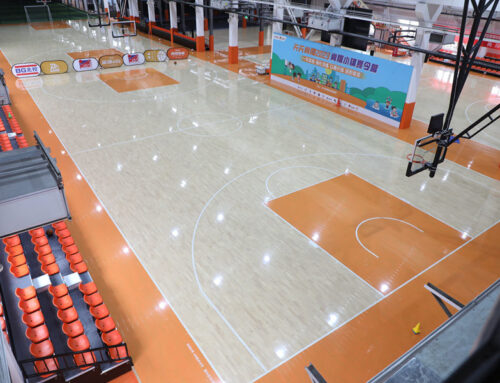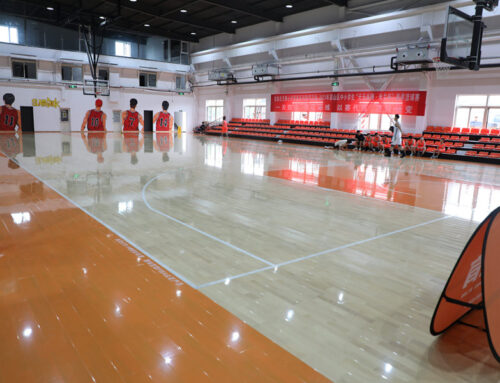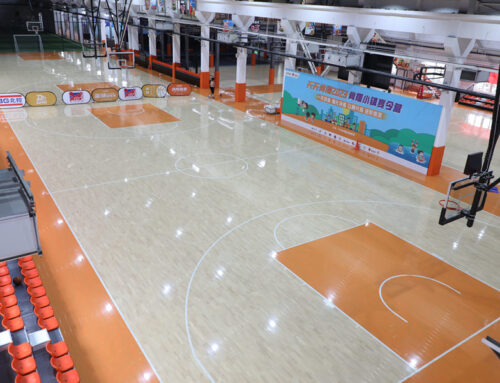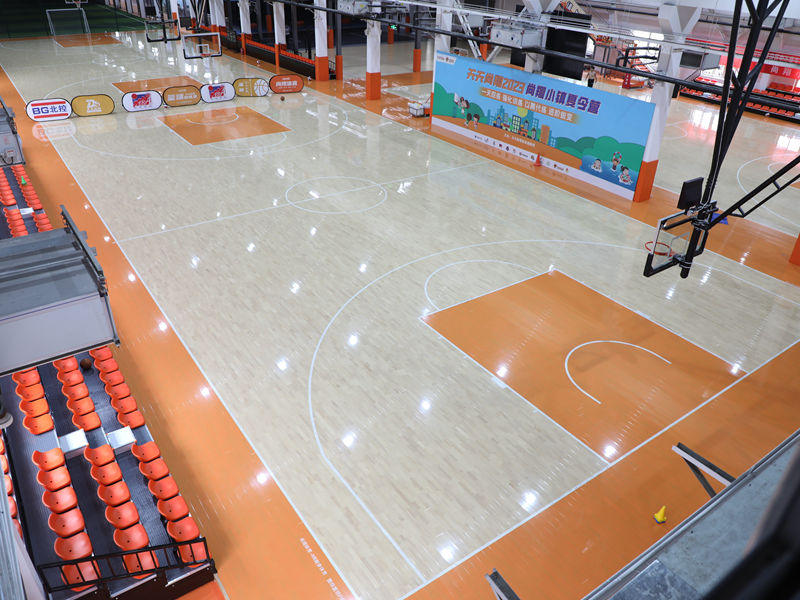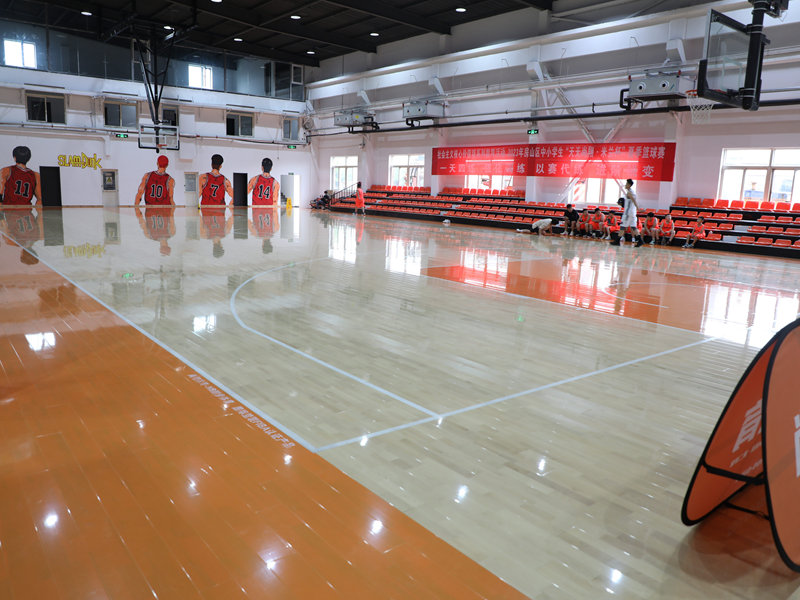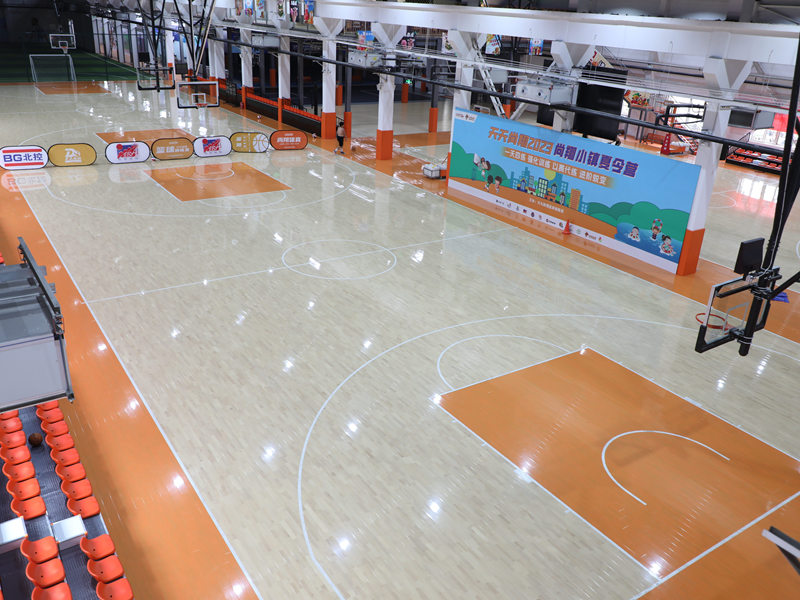
The finish is the final layer applied to a basketball court hardwood floor, and it is arguably the most important layer for day-to-day performance. The finish determines how the ball bounces, how the floor feels underfoot, how it looks, and how long it lasts. Getting the finish right is essential for a court that plays well and looks great.
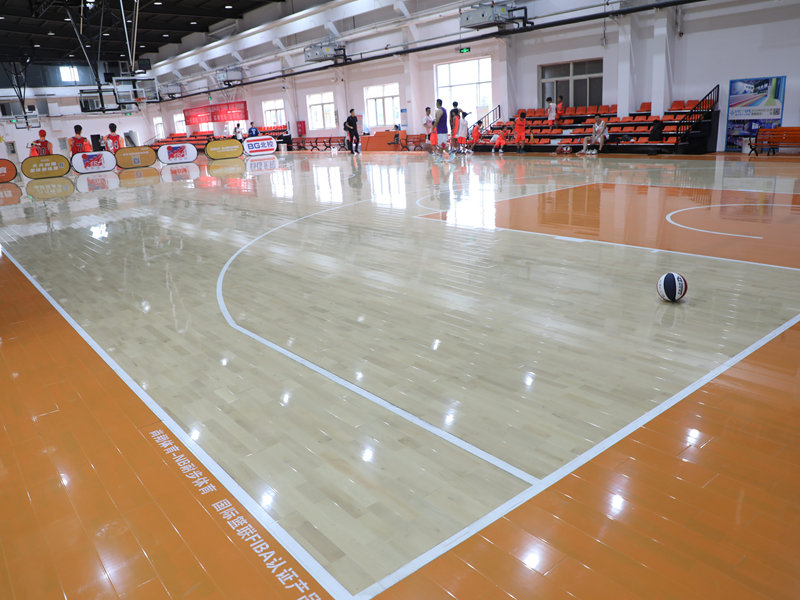
In this article, we will cover everything you need to know about finishes on basketball court hardwood floors.
What Is a Finish?
A finish is a protective coating applied to the surface of the hardwood. It seals the wood, protects it from moisture, dirt, and wear, and provides the traction that players need. Without a finish, the wood would absorb moisture, stain easily, and wear down rapidly.
The two main types of finish used on basketball courts are polyurethane and penetrating oil. Polyurethane is by far the most common.
Polyurethane Finish: Water-Based vs. Oil-Based
Polyurethane finishes come in two varieties: water-based and oil-based.
Oil-based polyurethane was the traditional choice for basketball courts. It is very durable and provides excellent protection. However, it contains high levels of volatile organic compounds (VOCs), which contribute to air pollution and can cause health problems for installers and players. It also has a strong odor that can linger for days or even weeks after application.
**Water-based polyure the wood absorbs moisture and expands. When the humidity is low, the wood releases moisture and shrinks.
This expansion and contraction happens across the grain of the wood, which means the width of the planks changes more than the length. In a basketball court, where the planks are typically 70 to 75 millimeters wide, even a small change in width can create significant problems.
If the humidity swings too much, the planks can expand so much that they buckle or crown. Or they can shrink so much that gaps open between them. Both conditions are dangerous for players and damaging to the floor.
The Ideal Conditions
The ideal relative humidity for a basketball court is between 35% and 50%. The ideal temperature is between 18 and 24 degrees Celsius (65 to 75 degrees Fahrenheit). These conditions keep the wood stable and the finish intact.
Maintaining these conditions year-round requires a proper HVAC system. In humid climates, dehumidifiers may be needed in addition to air conditioning. In dry climates, humidifiers may be needed during the winter months.
What Happens When Humidity Gets Out of Control
If humidity is not controlled, the damage can be severe and expensive:
Gaps between planks: When the wood dries out, it shrinks, and gaps open between the planks. These gaps can trap dirt and debris, and they create an uneven playing surface.
Cupping and crowning: When one side of a plank is exposed to more moisture than the other (for example, from a water leak or a draft), the plank will cup or crown. This creates a bumpy surface that affects ball bounce.
Finish a synthetic floor 3 to 5 times.
Common Repairs
In addition to full refinishing, there are several common repairs that may be needed:
Scratch repair: Minor scratches can be filled with wood putty and sanded smooth.
Gap repair: Gaps between planks can be filled with flexible wood filler or epoxy.
Plank replacement: If a single plank is severely damaged, it can be removed and replaced without refinishing the entire court. This is one of the advantages of nail-down installation.
Conclusion
Refinishing is the key to extending the life of a hardwood basketball court. When done properly by experienced professionals, refinishing restores the floor to near-new condition. Plan for refinishing every 5 to 10 years, budget accordingly, and your hardwood court will serve you for decades.