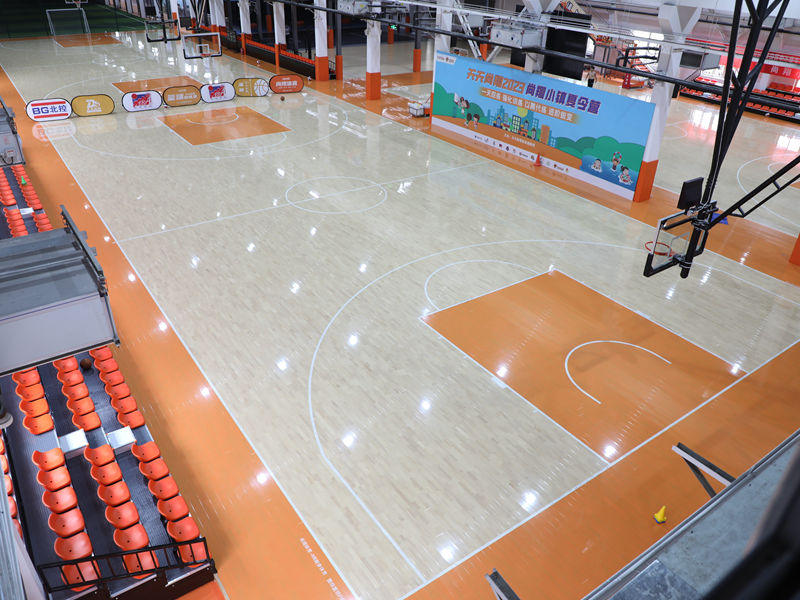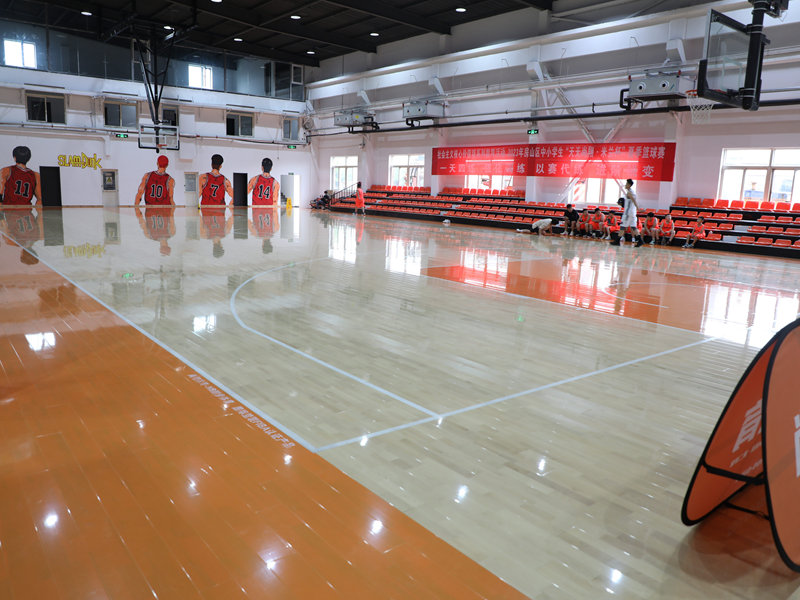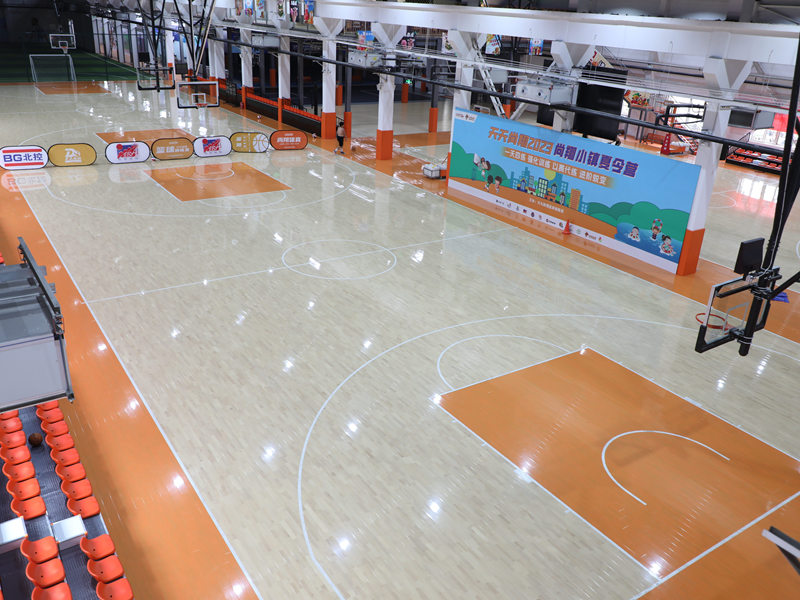
Basketball wood flooring has come a very long way since the early days of the sport, when courts were just rough, uneven planks nailed directly to the ground with no supporting structure at all. Those old floors were full of gaps, had terrible inconsistent bounce, and were so hard that players’ joints ached for days after every game. Over time, people started to understand that the floor was not just a trivial part of the game, but a critical piece of equipment that directly affected player performance and safety.
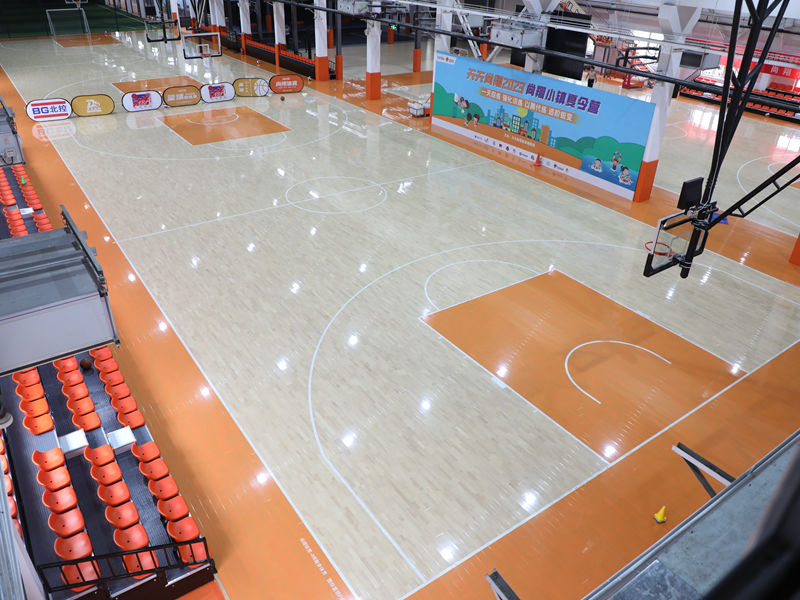
The first big innovation was adding a small air gap under the wood planks, which gave the floor a little bit of flexibility and shock absorption. But those early systems were still nailed down permanently, which made repairs very difficult. The real breakthrough came with the development of fully modular interlocking panels, which completely changed how basketball floors are installed and used. Modern modular systems use layered panel designs that combine the natural performance benefits of real hardwood with modern engineering, creating a surface that is far more consistent, far more durable, and far easier to maintain than anything that existed in the past. Manufacturers now test every new design in laboratories, measuring exactly how much shock the floor absorbs, how consistent the ball bounce is across every inch, and how the material holds up after thousands of simulated hours of heavy foot traffic. These tests ensure that every new generation of modular flooring performs better than the one before it. Today’s systems are so well engineered that they can handle the nonstop heavy use of a professional arena, hosting hundreds of games and events every year, and still stay in perfect condition for decades. This evolution shows how much the sport of basketball has grown, and how much care people put into creating the best possible playing experience for every athlete.