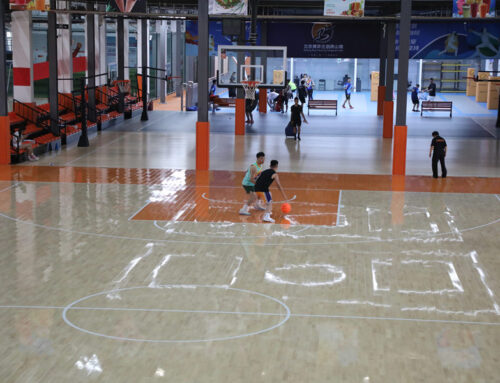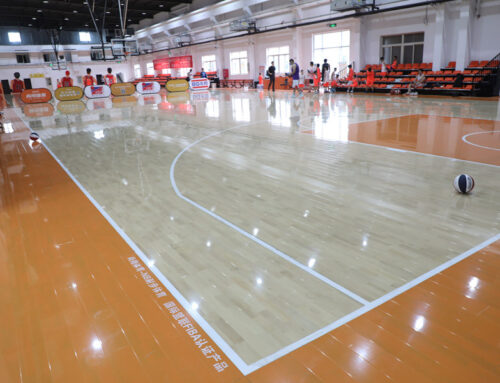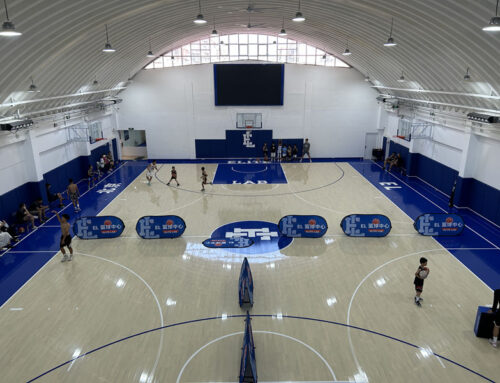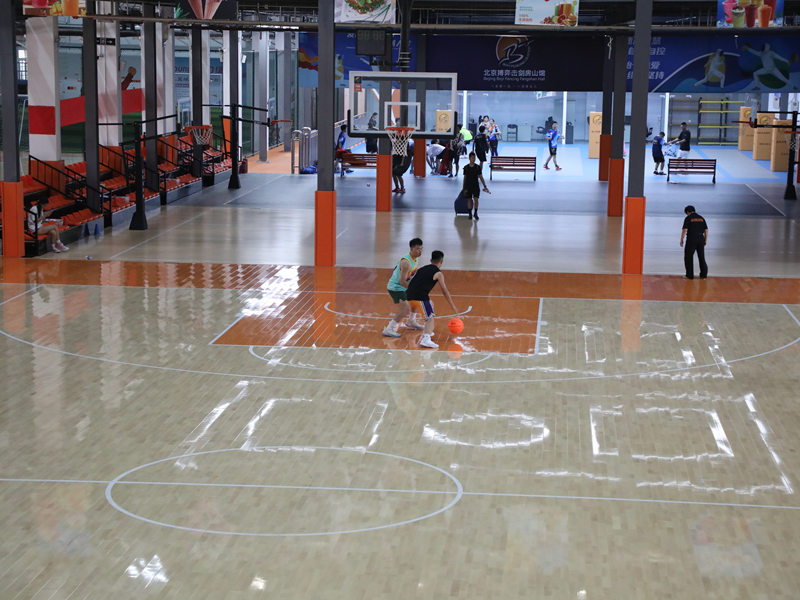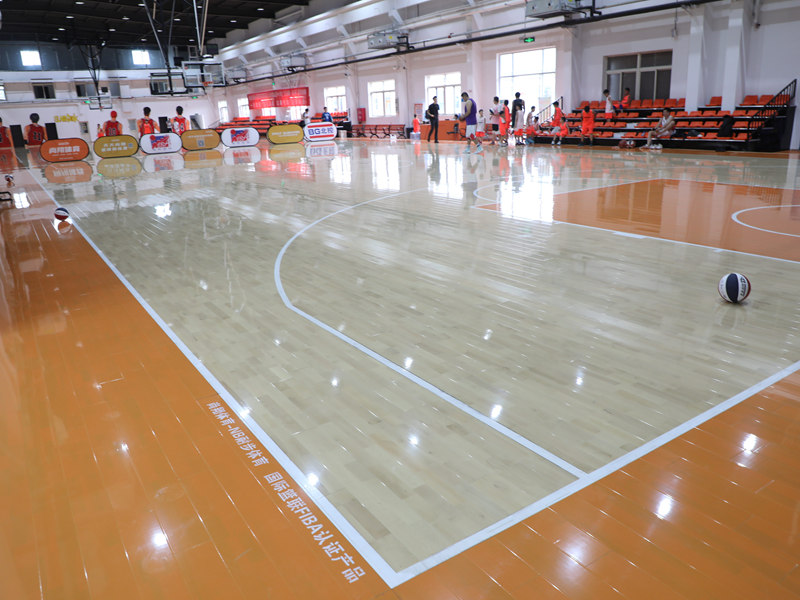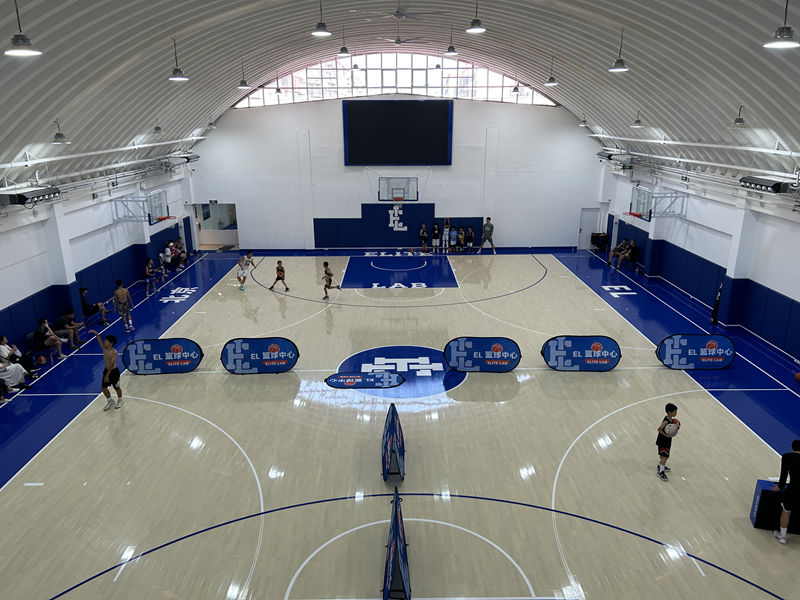
Schools are among the biggest buyers of portable basketball court wood flooring, and for good reason. School athletic programs face unique challenges: limited budgets, multi-use facilities, varying usage patterns, and the need to serve students of all ages and skill levels. Portable flooring addresses every one of these challenges.
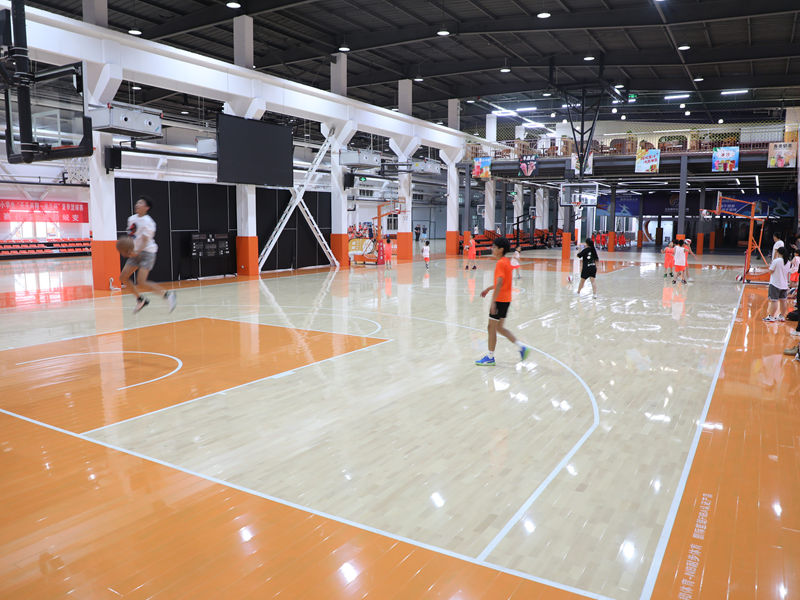
Budget constraints are the primary driver. Most school districts cannot afford to build permanent hardwood courts at every school. A portable system costing 40,000 to 80,000 dollars can serve an entire district by rotating between schools. This allows every school to have access to a high-quality playing surface without the capital expenditure of permanent construction.
Multi-use is essential in school settings. A gymnasium that hosts basketball in the winter, volleyball in the spring, and graduation ceremonies in June needs a floor that can adapt. Portable wood flooring with multi-sport line kits allows schools to switch between sports in minutes. The same floor serves physical education classes, intramural leagues, varsity practices, and community events.
Varying usage patterns are another advantage. During the school year, the court may be used daily for practices and games. In the summer, it may sit idle or be durability. They were used only for casual, informal play and would fall apart after a few uses. In the 1970s and 1980s, interlocking parquet-style wood tiles appeared, offering better consistency and easier assembly. But these systems were still heavy, inflexible, and far from the performance of permanent hardwood.
The 1990s brought engineered wood construction, which allowed manufacturers to create thinner, lighter panels without sacrificing strength. This was a game-changer for portability. For the first time, a full-size court could be assembled by a small crew in a single day. Connection systems also improved, with tongue-and-groove joints becoming standard.
The 2000s saw the introduction of multi-layer construction and UV-cured finishes. These technologies dramatically improved performance, durability, and aesthetics. Portable floors began to look and feel like permanent hardwood, and performance standards started to converge.
The 2010s brought precision milling and computer-aided manufacturing. Tolerances tightened to fractions of a millimeter, ensuring perfectly flat surfaces and secure connections. Anti-slip additives, moisture-resistant treatments, and fire-retardant coatings became standard. Portable flooring entered the mainstream.
Today, in the 2020s, portable basketball court wood flooring is a mature, highly engineered product. Modern systems incorporate every technology that permanent floors have, plus the added benefits of modularity, reusability, and flexibility. The performance gap has all but disappeared. What remains is a clear choice based on usage pattern sustainable forests. End-of-life take-back programs, where manufacturers recycle old panels into new ones, will become standard. The circular economy model will replace the linear buy-use-dispose model.
Lighter and thinner panels will continue to push the boundaries of portability. Advances in engineered wood and composite materials will allow manufacturers to reduce panel thickness to 15mm or less while maintaining performance. This will make transportation easier, installation faster, and storage more efficient. A full-size court could one day fit in a standard van.
Modular customization will become more sophisticated. Future systems will allow users to mix panel types within a single court, combining high-performance panels in the playing area with more economical panels in the out-of-bounds zones. Color and design options will expand, with digital printing technology allowing virtually unlimited surface patterns.
The rise of pickleball and padel will create new demand for portable multi-sport floors. These fast-growing sports require surfaces that are different from basketball but can share the same base flooring. Portable systems that can quickly switch between basketball, pickleball, padel, and other sports will be in high demand.
Urbanization will drive demand for rooftop and outdoor portable courts. As cities become denser, traditional outdoor courts disappear. Portable flooring that can be installed on rooftops, parking structures, and plazas will fill the gap. Weather-resistant finishes and all-weather connection systems will be essential.
The professionalization of amateur and youth basketball will also drive demand. As more young players train year-round, the need for high-quality, accessible courts will grow. Portable flooring, with its flexibility and lower cost, is perfectly positioned to meet this demand.
The future of portable basketball court wood flooring is not about replacing permanent courts. It is about creating a new category of sports surface that is smarter, greener, more flexible, and more accessible than anything that came before. The best is yet to come.