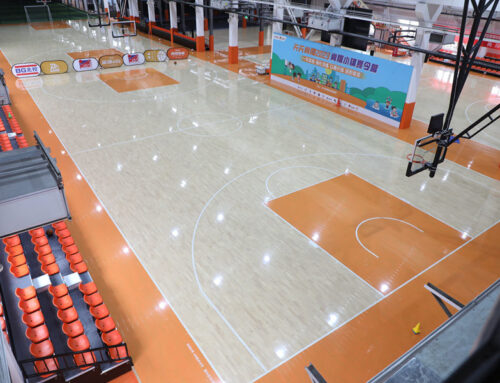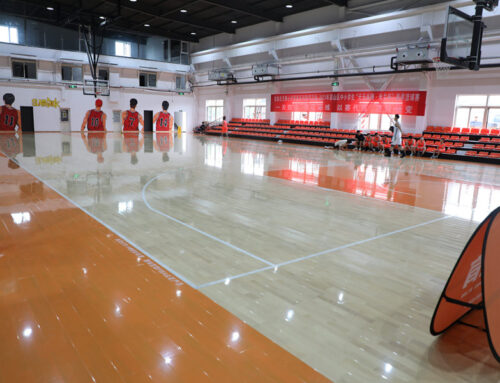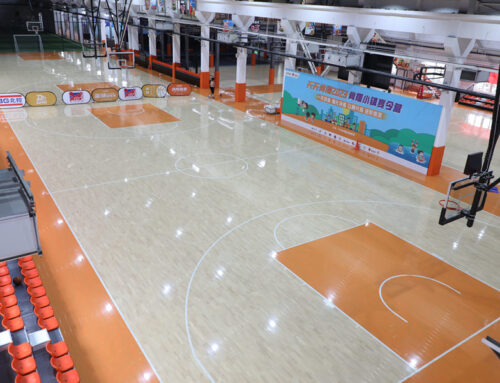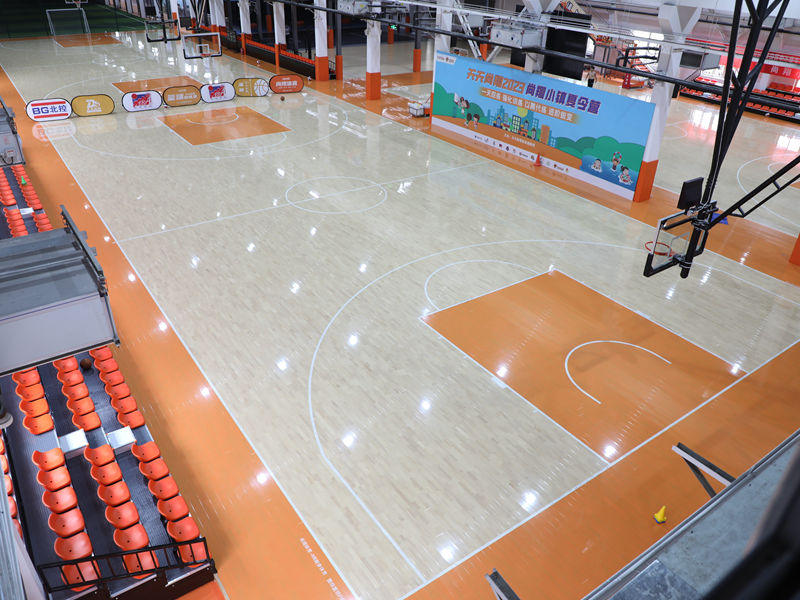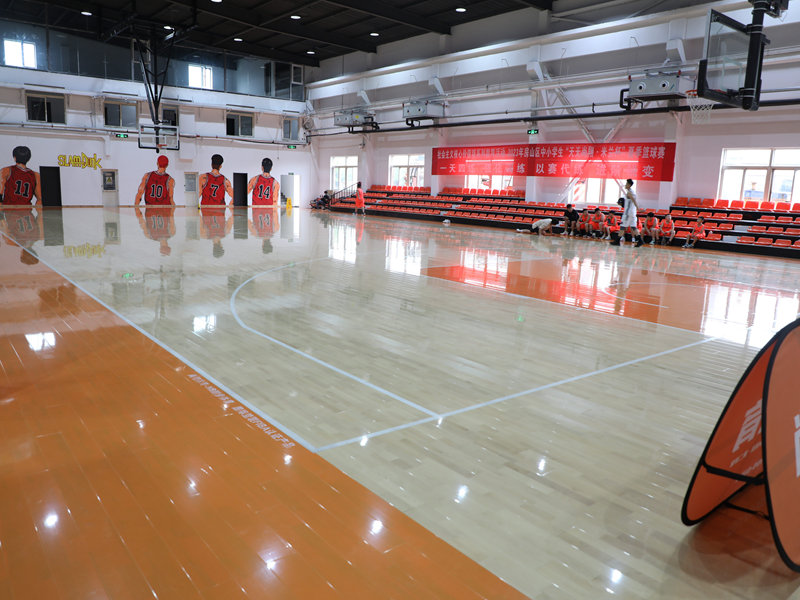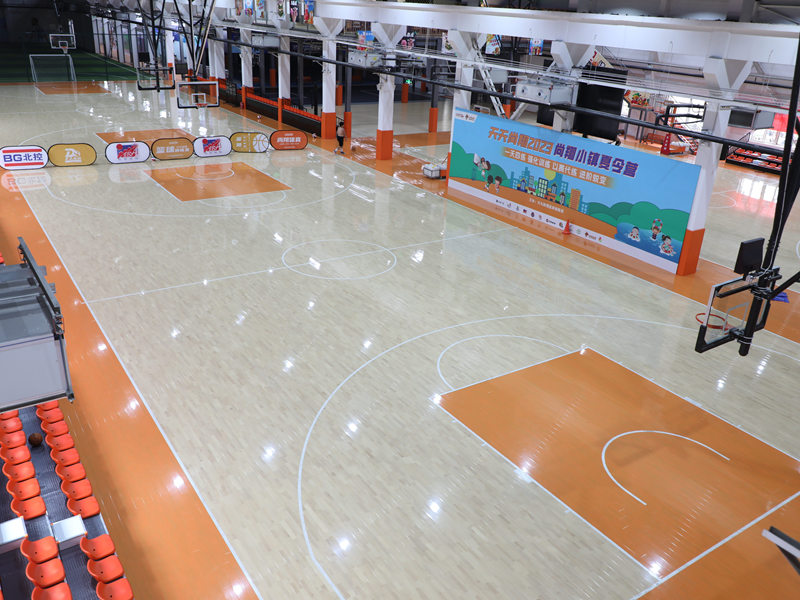
Assembling an indoor basketball wooden floor is not a one-size-fits-all process, and the assembly techniques need to be adjusted according to the different sizes of the court to ensure the best performance. For a full-size professional competition court that meets official standards, the assembly process needs to be carried out with the highest level of precision. The support sleepers must be arranged in a full grid pattern across the entire large area, with extra reinforcement added under the high-usage areas such as the free-throw lines, the baseline areas, and the positions under the basketball hoops, where players land and make sudden stops very frequently. This extra reinforcement ensures that these high-traffic areas have the same durability and shock absorption as the rest of the court, preventing these spots from wearing out much faster than other areas.
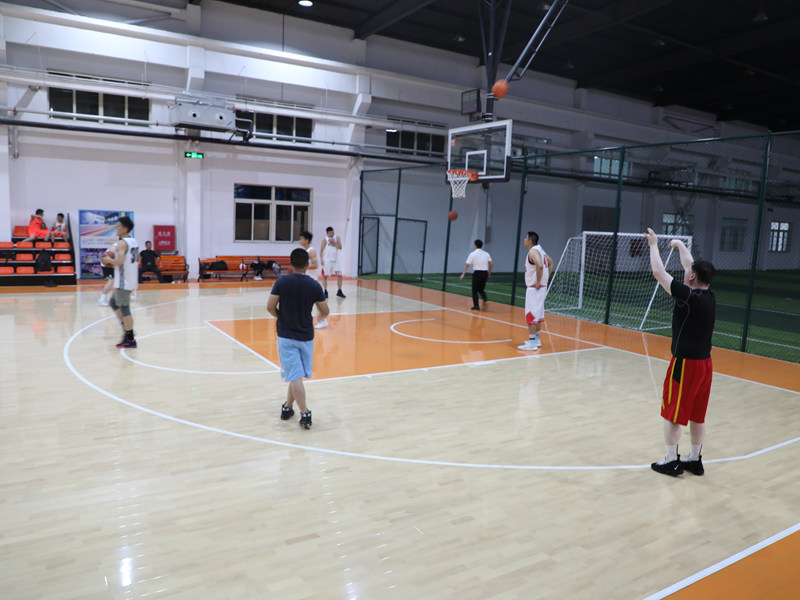
For a medium-sized training court that is smaller than the full professional size, the assembly technique can be adjusted to optimize the use of materials while still maintaining full performance. The spacing between the sleepers can be slightly adjusted according to the exact dimensions of the court, making sure that no planks need to be cut into very small narrow pieces that are easy to get loose. During assembly, you can also arrange the planks in a way that minimizes the number of cuts, reducing material waste and making the entire floor structure more stable. For these medium-sized courts, it is also important to make sure that the expansion gaps are calculated correctly according to the total area of the floor, because a smaller floor area will have a smaller total expansion range, so the gap width can be adjusted to match.
For a small half-court or home practice court, the assembly process can be simplified to be more convenient, while still maintaining all the core performance features. Since the area is small, the entire basketball wooden floor can be assembled as a single independent modular unit that can even be moved as a whole if needed. The support structure can be pre-assembled on the ground before laying the top planks, making the installation process much faster. Even for these small courts, you still need to make sure that the subbase is completely flat, and that the interlocking joints are all fully locked. By adjusting the assembly techniques to match the exact size of your court, you can get the best possible performance and the most cost-effective result from your basketball wooden floor.