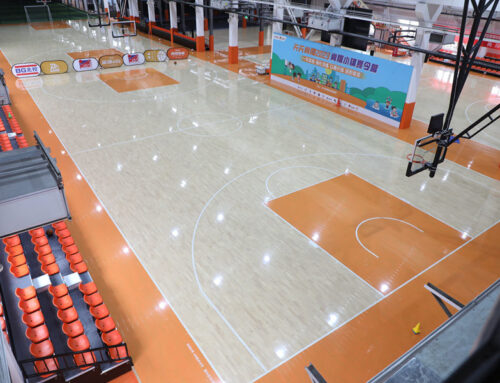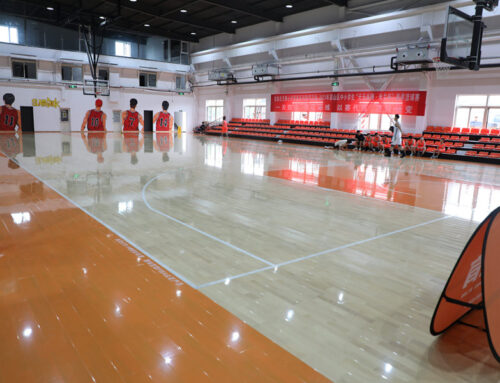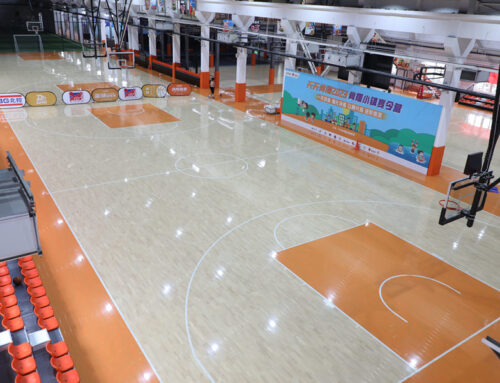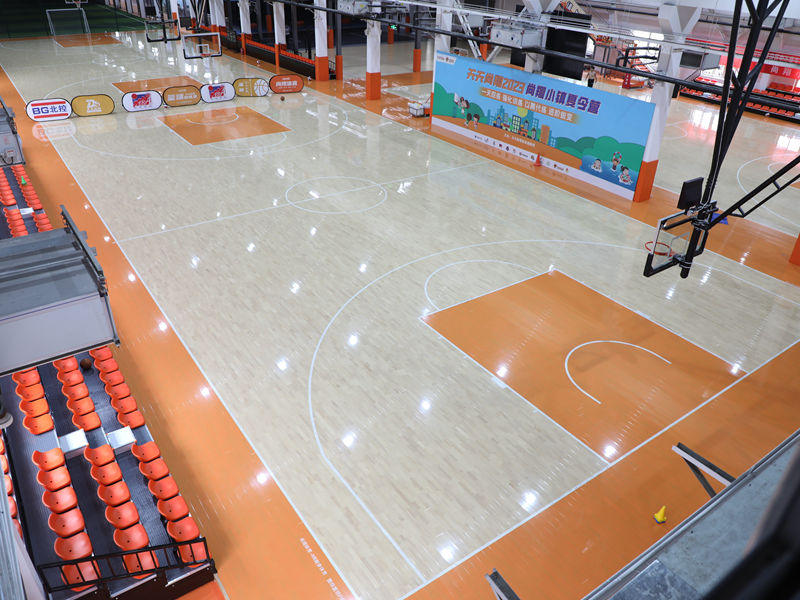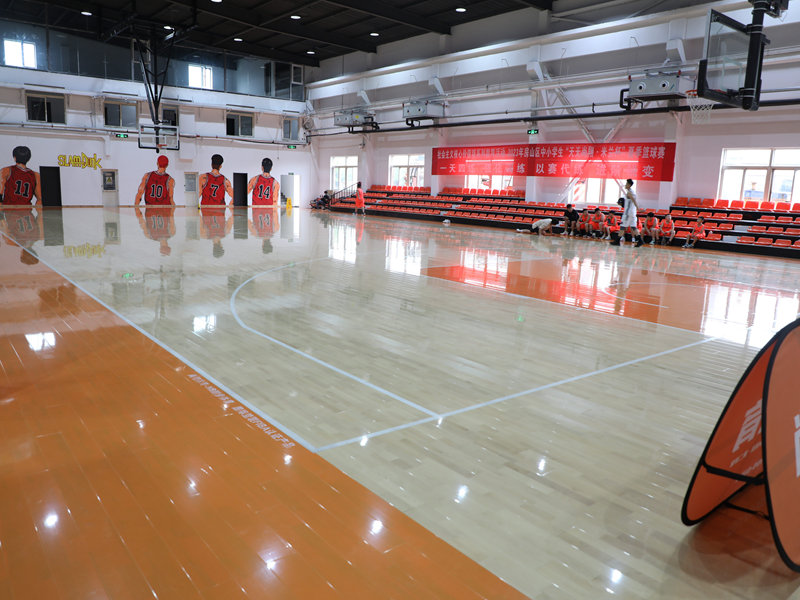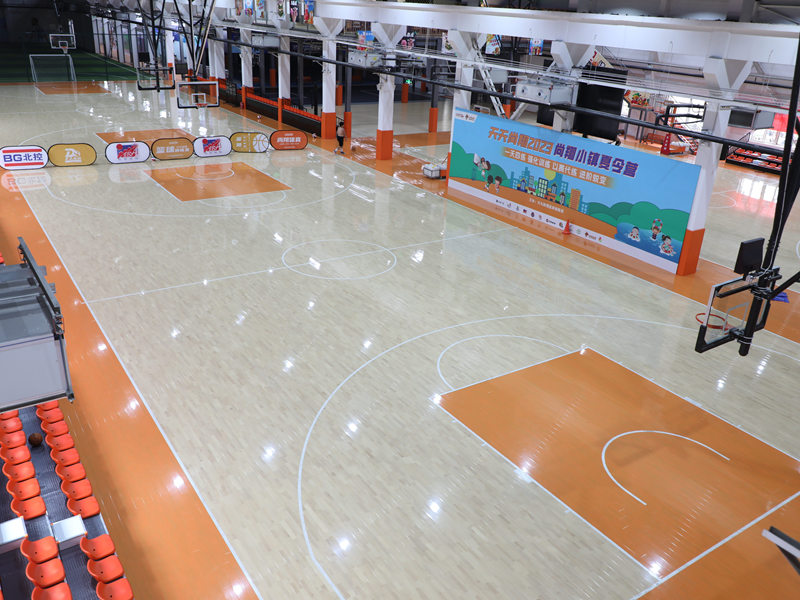
One of the biggest advantages of high-quality printed indoor sports wooden flooring is its extremely low long-term maintenance requirements, especially when compared to traditional hand-painted solid wood floors. Traditional wooden sports floors require regular sanding and re-coating every few years, a process that removes a thin layer of the wood surface and erases the hand-painted line markings, requiring them to be completely re-applied after every resurfacing.
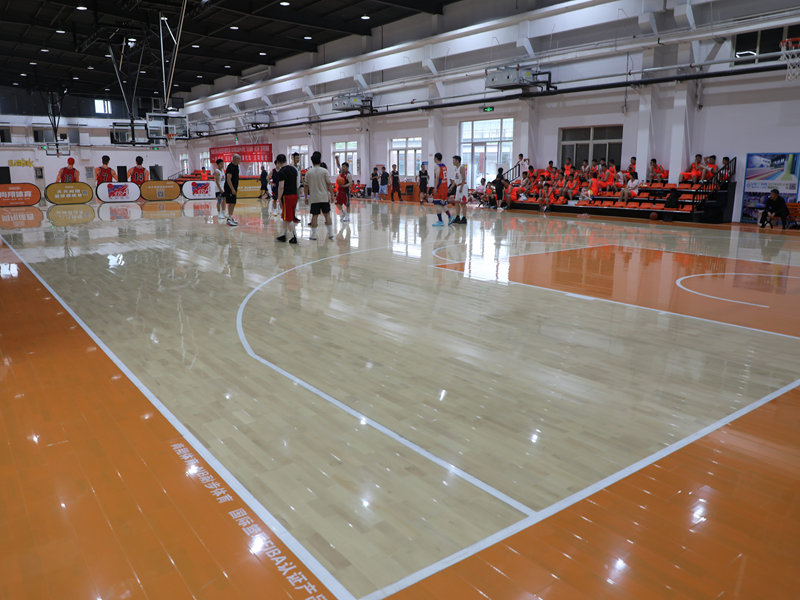
This process is not only time-consuming and expensive, but it also gradually reduces the thickness of the wood substrate, limiting the total number of times the floor can be resurfaced before it needs to be fully replaced. Printed sports flooring eliminates almost all of these maintenance headaches, because the printed imagery is fully encapsulated beneath the thick polyurethane wear layer. When the floor eventually needs to be refurbished after 15 to 20 years of heavy use, maintenance teams can sand the top layer of the wear coat without ever touching the printed imagery beneath. This means that after the resurfacing process is complete, all the court lines, custom graphics, and wood grain patterns look exactly as vibrant and crisp as they did on the day the floor was first installed. There is no need to re-paint any markings, no need to wait for paint to dry, and no risk of misaligned lines after the resurfacing is finished. The smooth, non-porous surface of the printed wear layer also repels dirt and spills far more effectively than a traditional unfinished wood surface, making daily cleaning as simple as using a dry microfiber mop to remove dust, and a pH-neutral cleaning solution for occasional deeper cleans. There is no need for special wax treatments, no need for harsh chemical strippers, and no risk of staining from spilled sports drinks or food during events. This drastically reduces the total cost of ownership over the 30+ year lifespan of the flooring system, making printed sports wooden flooring an extremely cost-effective choice for public schools, community centers, and professional sports venues alike.