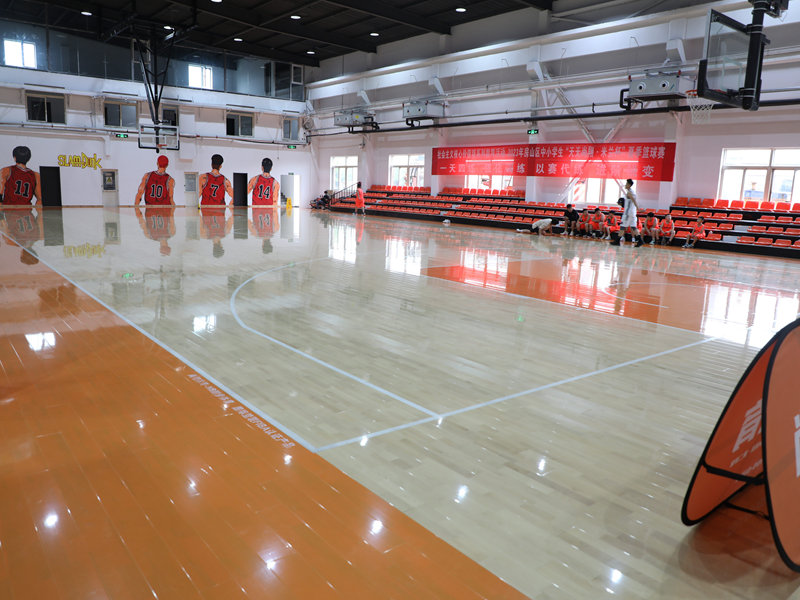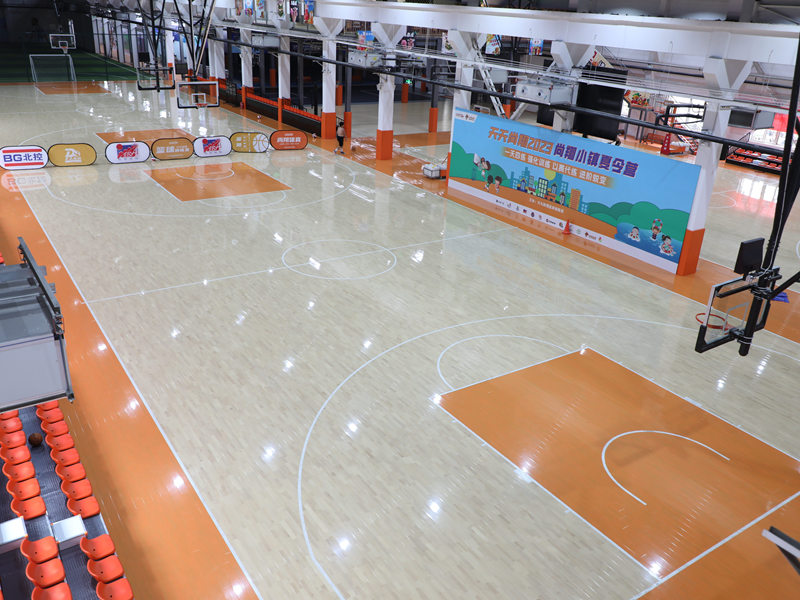
Dimensional stability is one of the most important, and most misunderstood, characteristics of a high-quality basketball court wooden floor, and it is the key feature that prevents all the most common problems that ruin lower-quality court surfaces. Dimensional stability refers to the ability of the entire floor system to resist warping, cupping, gapping, or buckling even when exposed to normal changes in temperature and humidity that happen in every indoor facility over the course of a year.
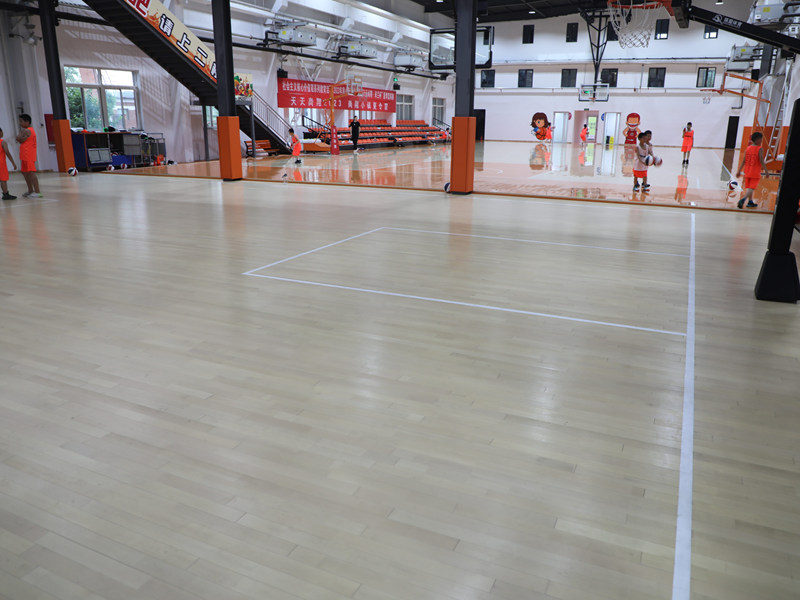
A low-stability floor, made from poorly selected wood or installed without a proper support system, will react dramatically to even small shifts in environmental conditions, creating all kinds of performance issues that disrupt play and create safety hazards. To maximize dimensional stability, modern basketball court wooden floor systems use engineered multi-layer wood panels in the subfloor, where the grain of each layer of wood is oriented perpendicular to the grain of the layers above and below it. This cross-grain construction means that when one layer of wood tries to expand or shrink in response to moisture changes, the adjacent layers pull against it, preventing the entire panel from warping or changing shape in any significant way. This design makes the subfloor far more stable than a simple solid wood panel, which can twist and warp dramatically when exposed to changing humidity levels. The top hardwood planks are also milled to exacting standards, with every plank having a perfectly uniform thickness and a precisely controlled moisture content that matches the environment of the facility. The planks are installed with a tiny, pre-calculated gap around the edges of the entire court, right where the wood meets the walls of the building. This gap, which is usually hidden behind a decorative baseboard, gives the entire floor room to expand slightly when humidity levels rise, so the planks do not push against each other and buckle upward. Even the fasteners used to attach the planks to the subfloor are designed to allow a tiny amount of movement, so the wood can expand and contract without cracking around the nail holes. When all of these stability features are combined, the basketball court wooden floor stays almost perfectly flat and gap-free across every season of the year, no matter how much the weather outside changes. This stability ensures that the ball bounce stays 100% consistent across the entire court, that there are no uneven edges to trip players, and that the floor maintains its perfect performance characteristics for decades, without any unexpected, costly repairs.