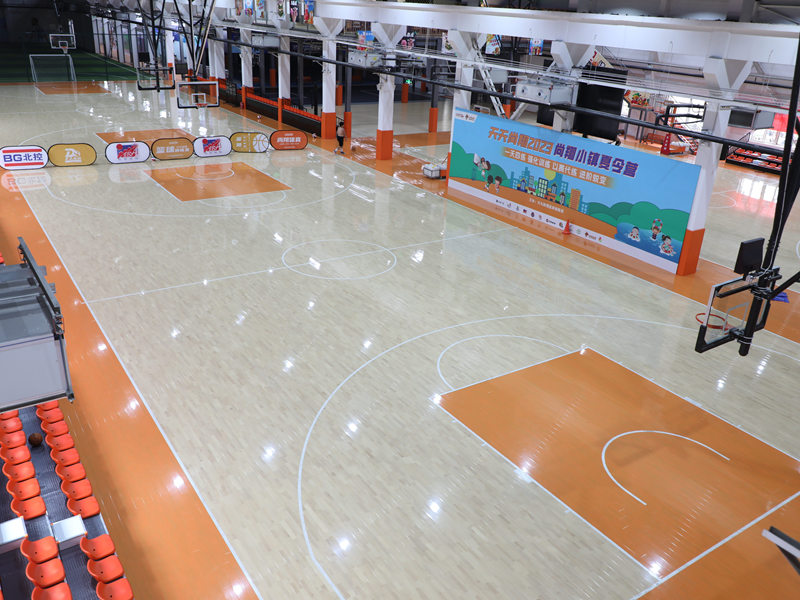
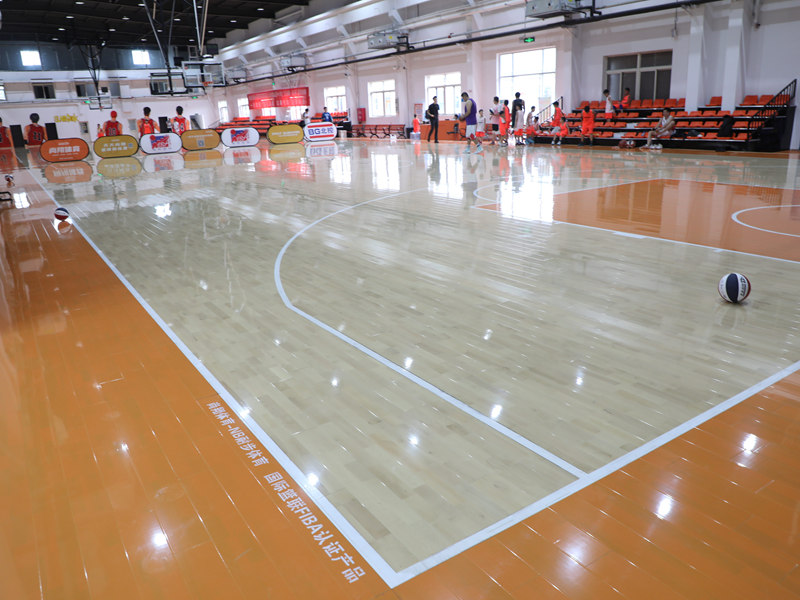
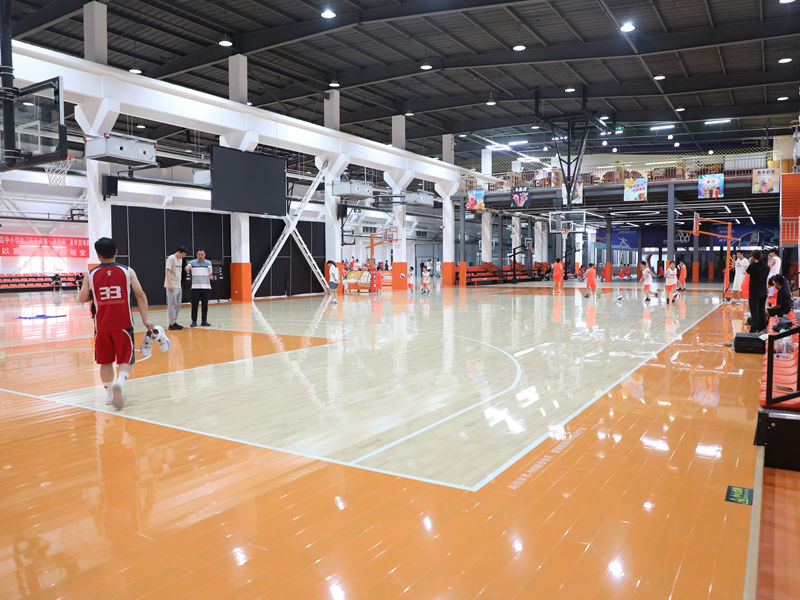
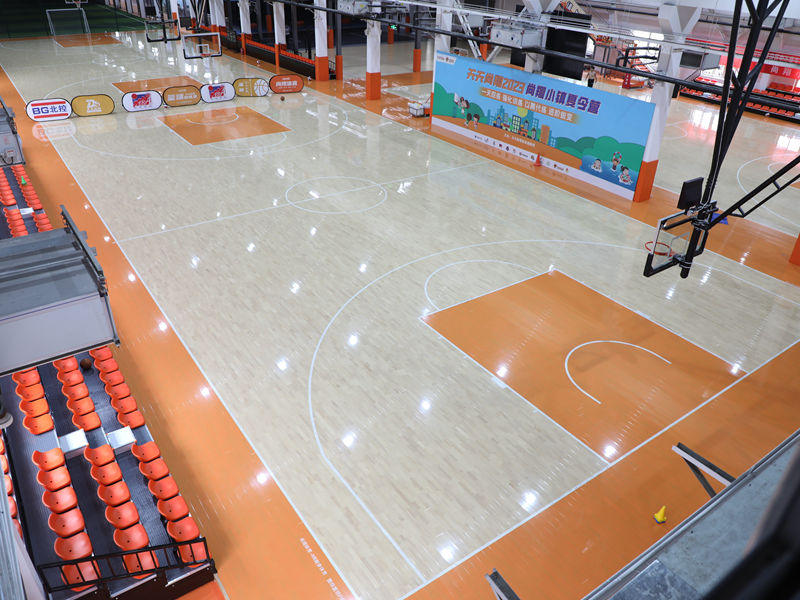
There are many persistent myths about indoor basketball court wood flooring that have spread among venue operators and players over the years, many of which are completely untrue and prevent people from making the best choice for their venue. One of the most common misconceptions is that wood floors are inherently more slippery than synthetic surfaces, making them more dangerous for players. In reality, a properly maintained wood basketball court delivers far more consistent, controllable traction than almost any synthetic surface on the market. The myth of slippery wood floors usually comes from people who have only played on poorly maintained old wood floors that were covered in decades of built-up wax residue, dirt, and worn-out finish. A correctly finished and regularly cleaned modern wood court has perfectly balanced traction that is far safer than a synthetic surface whose textured top layer gets clogged with rubber dust and debris over time, turning permanently slippery in spots that cannot be cleaned.

Another widespread myth is that indoor basketball court wood flooring is extremely high maintenance and requires constant expensive work to keep it in good condition. This could not be further from the truth: the basic daily maintenance for a wood court is nothing more than a quick dust mopping to remove dirt and debris, which takes less time than the deep cleaning required to keep a synthetic surface free of embedded rubber particles. The periodic deep cleaning and recoating work that a wood court needs only has to be done once every 3-5 years, and the total cost of this maintenance over the 50+ year lifespan of the floor is far lower than the cost of replacing a synthetic floor every 10-15 years. Many people also believe that wood floors are easily damaged by water, but modern wood flooring systems are built with full moisture barriers and sealed with water-resistant finishes. Small spills can be wiped up in seconds with no damage at all, and the only real risk comes from leaving large amounts of standing water on the surface for hours, which is a risk that applies equally to almost every other flooring material.
A third common misconception is that wood basketball courts are outdated, and that modern synthetic materials are always better for performance. This idea ignores more than a century of real-world testing and feedback from millions of players, who consistently report that wood courts offer the best balance of shock absorption, stability, and feel. Synthetic surfaces have improved a lot in recent decades, but they still cannot replicate the natural, responsive give of a properly engineered wood flooring system. Many players also note that synthetic surfaces feel “dead” underfoot, with a uniform, artificial bounce that never changes, no matter how long you play on it. A wood court, by contrast, has a natural, living feel that responds to your movement in a way that feels intuitive and connected to your body. These persistent myths have no basis in real-world performance data, and they only exist because most people have never experienced a properly installed and maintained modern indoor basketball court wood flooring system.