Introduction
No matter how well you maintain your basketball court hardwood floor, eventually it will need repairs. Scratches, dents, gaps, and worn-out finishes are all part of the life cycle of a hardwood floor. The good news is that most problems can be fixed without replacing the entire floor. In this article, we will cover the most common basketball court hardwood problems, how to diagnose them, and how to repair them.
Common Problems and Their Solutions
Problem 1: Scratches and Scuff Marks
Cause: Shoe friction, dirt particles, furniture dragging
Severity: Cosmetic (unless deep)
Solution:
- Light scratches: Apply a maintenance coat of water-based polyurethane. Buff with a microfiber pad.
- Deep scratches: Sand the area with 120-grit sandpaper, apply wood filler if needed, then refinish with 2-3 coats of finish.
- Scuff marks (shoe rubber): Use a melamine sponge (Magic Eraser: Buckling (Boards Push Upward)**
Cause: Extreme humidity — the wood has expanded beyond the expansion gaps
Severity: Severe (safety hazard)
Solution:
- Mild buckling: Reduce humidity immediately. The boards may settle back down.
- Severe buckling: The affected boards must be removed, the subfloor dried, and the boards re-installed with proper expansion gaps.
Cost: 2,000−10,000.
Problem 6: Squeaking
Cause: Loose boards, inadequate fasteners, or subfloor movement
Severity: Minor (annoying but not dangerous)
Solution:
- From above: Drive additional screws or nails through the tongue of the boards into the subfloor.
- From below: Inject construction adhesive between the subfloor and the hardwood, then clamp or weight the boards until the adhesive cures.
Cost: 100−1,000.
Problem 7: Finish Wear (Dull Spots in High-Traffic Areas)
Cause: Normal wear from foot traffic
Severity: Cosmetic to Moderate (affects traction)
Solution:
- Apply a maintenance coat of water-based polyurethane to the worn areas.
- For extensive wear, the entire floor may need to be re-sanded and re-finished.
Cost: 500−5,000 (spot repair) to 10,000−30,000 (full refinish).
**Problem 8: Subfloor court hardwood flooring has come a long way from the bare oak floors of the 1890s. Today, it is a highly engineered system that combines advanced materials science with precision manufacturing. But the innovations don’ there. In this article, we will explore the trends and technologies that are shaping the future of basketball court hardwood flooring.
Trend 1: Engineered Hardwood Panels
Traditional strip flooring is being challenged by engineered hardwood panels. These are pre-finished panels (typically 4′ x 8′ or larger) that can be installed much faster than traditional strip flooring.
Advantages:
- Faster installation (up to 50% faster)
- Consistent finish quality (factory-applied)
- Less waste (fewer offcuts)
- Can be installed over existing floors in some cases
Disadvantages:
- Higher material cost
- Fewer finish options
- May not meet all governing body standards (yet)
Trend 2: UV-Cured Finishes
As we discussed earlier, UV-cured finishes are the next generation of court finishes. They offer near-zero VOC, instant cure, and superior durability.
Current Status: UV-cured finishes are used in a small number of NBA and NCAA facilities. As the technology matures and costs come down, they will become the standard.
Timeline: Widespread adoption within 5-10 years.
Trend 3: Smart Floors
The integration of technology into basketball court floors is already happening. Smart floors use embedded sensors to:
- **Track player movement
Trend 7: Modular and Portable Courts
The demand for temporary and portable basketball courts is growing, driven by events, pop-up experiences, and underserved communities. Modular hardwood systems can be installed and removed quickly, providing a high-quality playing surface anywhere.
Current Status: Available from several manufacturers.
Timeline: Growing rapidly, will be mainstream within 5 years.
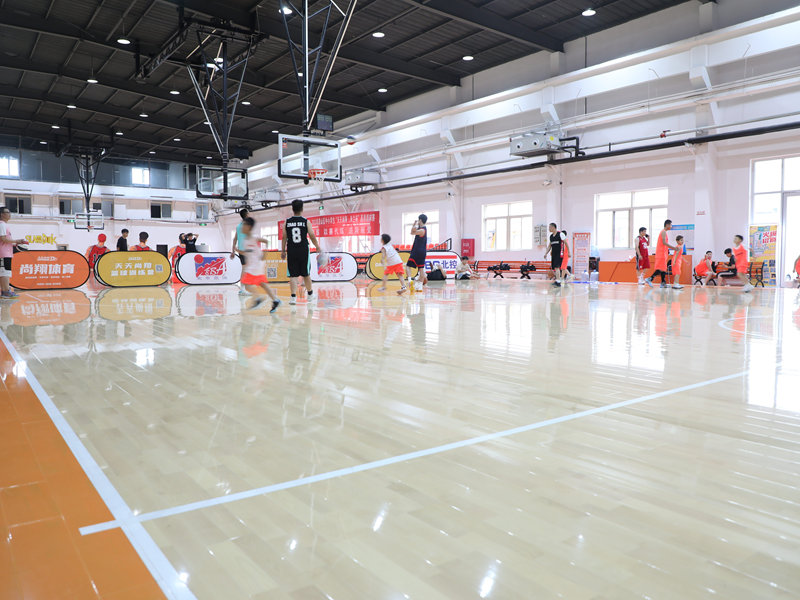
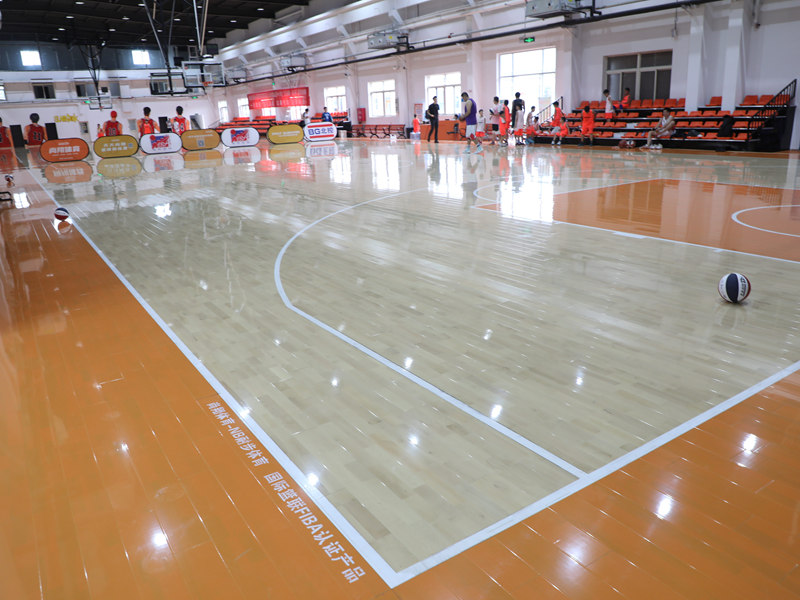
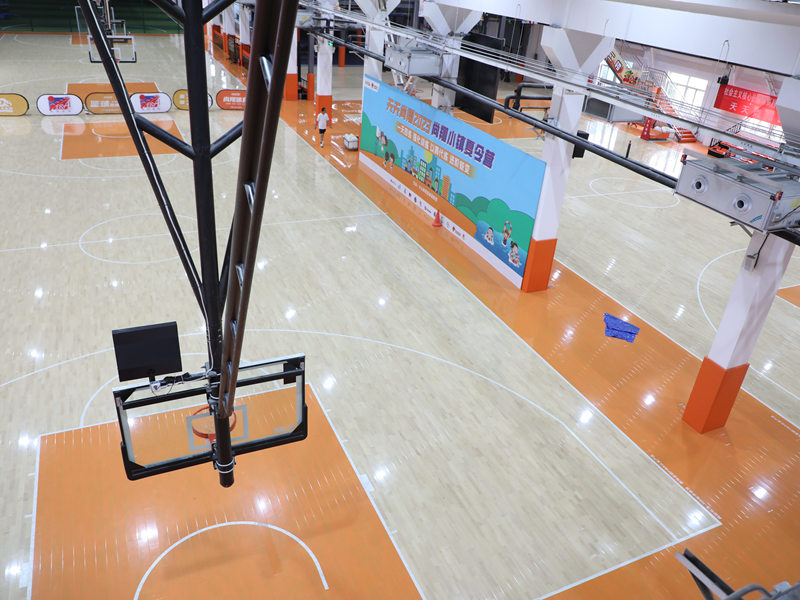
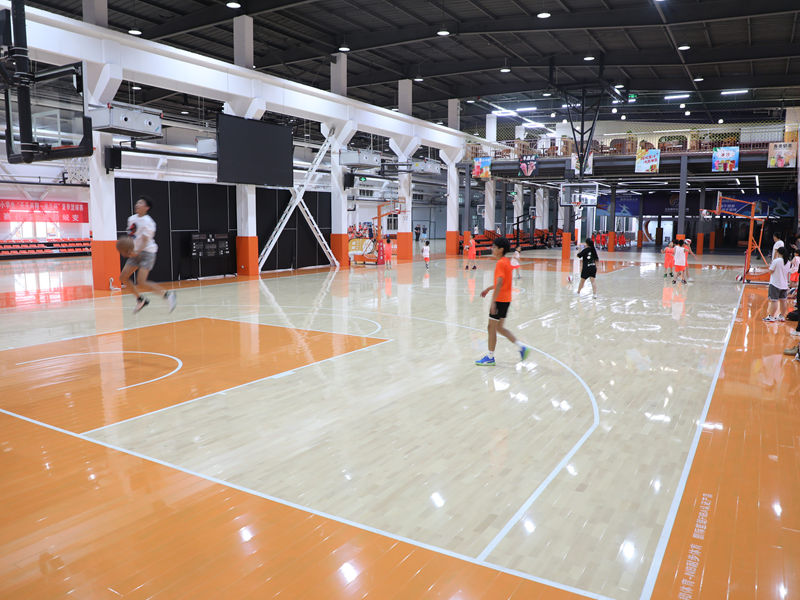
Trend 8: Colored and Customized Courts
While traditional maple courts are bright and natural, there is a growing trend toward colored and customized courts. Water-based stains and colored finishes allow for:
- Team colors
- School colors
- Sponsor logos
- Decorative patterns
Current Status: Popular in recreational and international markets.
Timeline: Growing, especially in non-professional settings.
What This Means for Facility Owners
| If You Are Building Now | Recommendation |
|---|---|
| Professional/Collegiate | Double-layer maple with water-based finish (proven technology) |
| High School | Single-layer maple with water-based finish (best value) |
| Recreational | Engineered panels or Sport Court tiles (fast, affordable) |
| Future-Proof | Spec a subfloor that can accommodate UV-cured finishes and smart sensors later |
The Bottom Line
The future of basketball court hardwood flooring is bright — literally. New finishes are more durable and eco-friendly, new materials are stronger and more sustainable, and new technologies are making courts smarter and more versatile. By staying informed about these trends, you can make decisions today that will serve your facility well into the future.