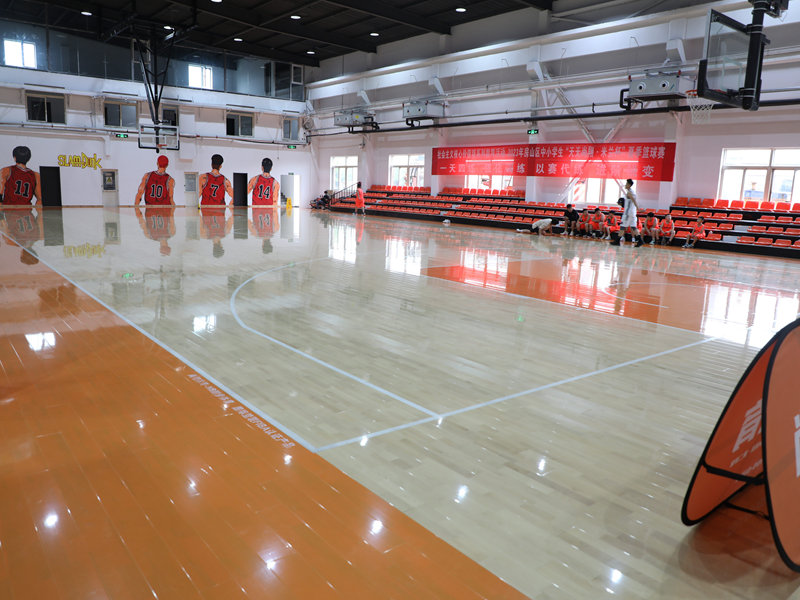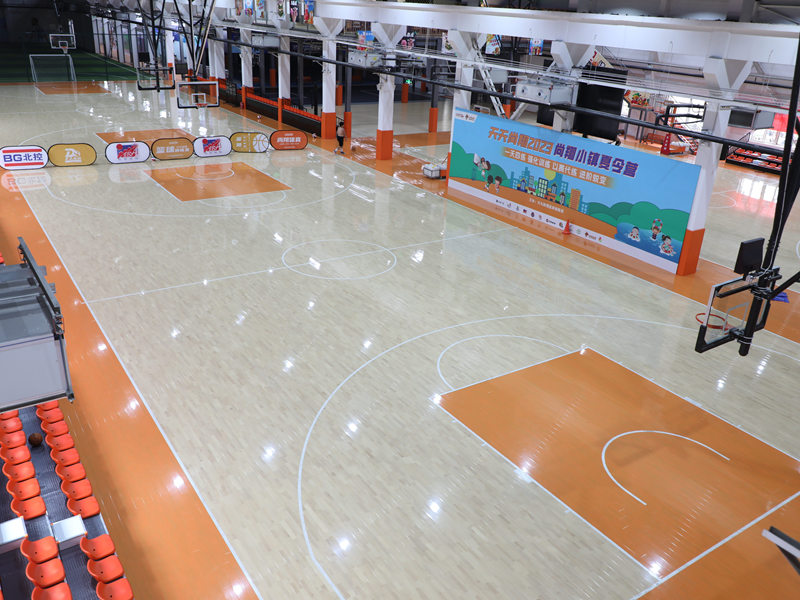
Basketball players perform approximately 1,000 direction changes during a single game, each requiring precise traction between shoe and surface to execute properly without injury. NB Basketball Wood Flooring engineers have dedicated enormous research resources to understanding and optimizing this critical interaction, developing a surface that provides secure grip during explosive movements while still allowing the controlled slides that are essential to advanced basketball footwork.
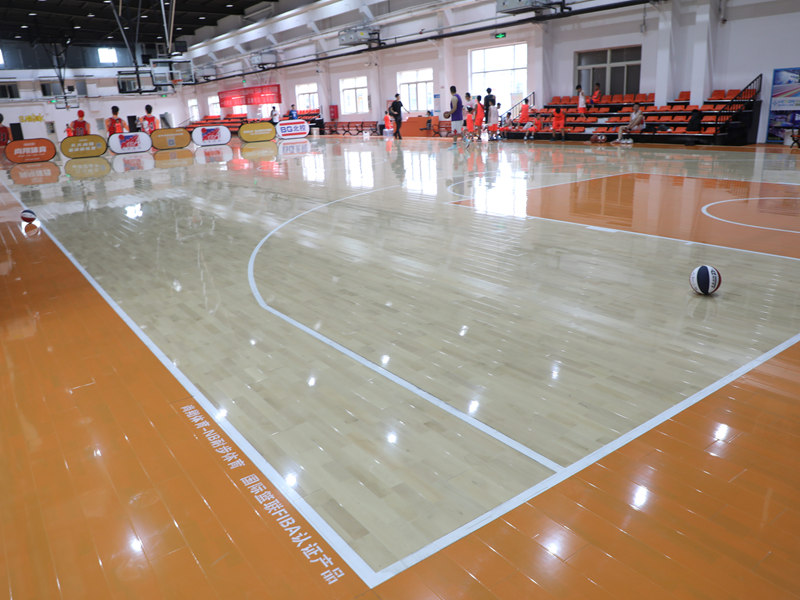
The traction characteristics begin at the microscopic level with NB’s proprietary finish formulation, which contains precisely calibrated ceramic and aluminum oxide particles suspended in a flexible polyurethane matrix. These particles create millions of microscopic contact points that interact with the rubber compounds in athletic shoe outsoles, generating friction through mechanical interlocking rather than simple adhesion. This approach creates traction that remains consistent regardless of surface moisture—whether from player sweat, spilled drinks, or arena humidity—unlike traditional finishes that can become dangerously slippery when wet. The pattern of these particles is not random; NB uses advanced application technology to orient them in specific directional alignments that correspond to common basketball movements. More particles are concentrated in areas where players typically push off for acceleration (like near the three-point line) and fewer in areas where sliding stops are common (like under the basket). This intelligent distribution creates what players describe as “smart traction”—a surface that seems to understand what their feet are trying to do and responds accordingly. Beyond the finish itself, the maple wood substrate contributes significantly to the overall traction equation. NB uses a specific sanding technique that creates just enough surface texture to enhance grip without becoming abrasive to shoe materials or player skin during falls. This texture is measured in microns and maintained within a tight tolerance range across every square foot of NB Basketball Wood Flooring, ensuring uniform traction characteristics regardless of where on the court a player is positioned. The moisture content of the wood plays a surprising role in traction performance as well. NB maintains its maple planks at an optimal 7% moisture level that keeps the wood fibers slightly resilient rather than completely rigid. This subtle flexibility allows the surface to conform microscopically to shoe patterns, creating more contact area and thus better traction than could be achieved on an absolutely hard surface. Players often describe this sensation as the floor “grabbing” their shoes during hard cuts, providing confidence to make aggressive moves without fear of slipping. For sports scientists studying basketball movement, NB courts provide ideal laboratory conditions because their traction characteristics are so consistent and measurable. Researchers can collect reliable data on cutting angles, stopping forces, and push-off efficiency knowing that variations in their results come from athlete performance rather than surface inconsistencies. This research in turn feeds back into NB’s ongoing development process, creating a virtuous cycle of innovation that continuously improves traction performance with each new generation of NB Basketball Wood Flooring. The result of all this scientific attention is a playing surface that becomes almost invisible to players during competition—they don’t have to think about their footing because they trust the floor completely. This mental freedom allows athletes to focus entirely on the strategic and creative aspects of the game, secure in the knowledge that their physical movements will be supported by the reliable traction of their NB court.