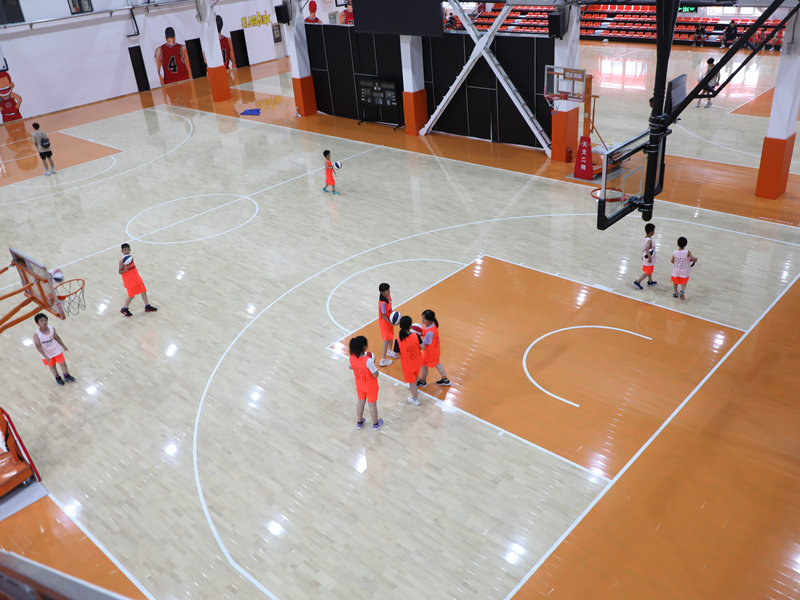
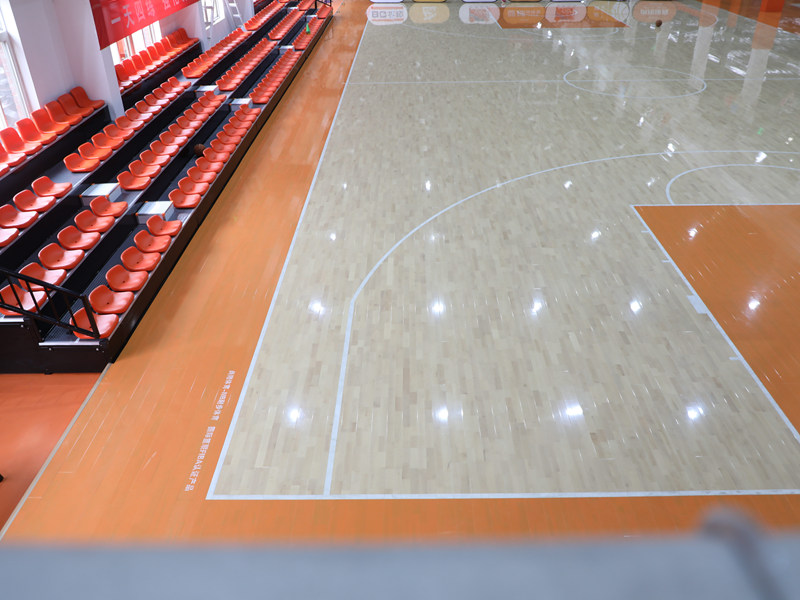
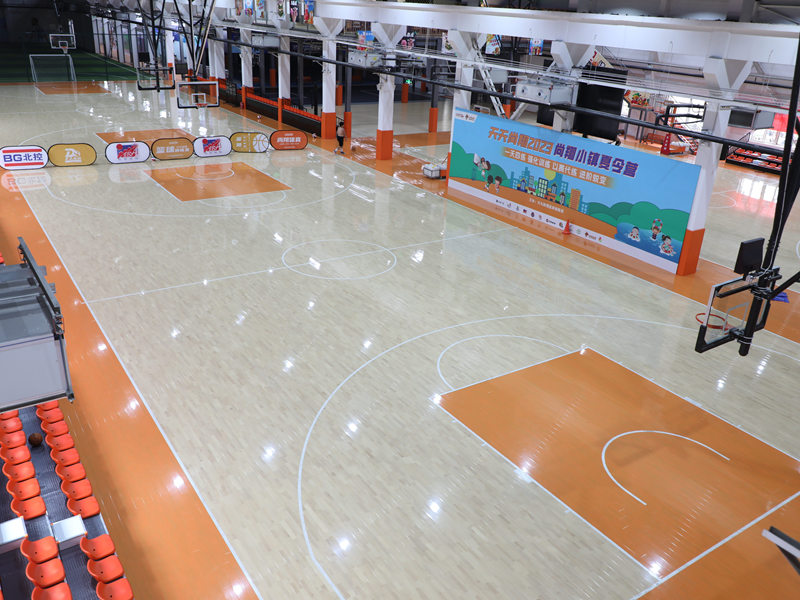
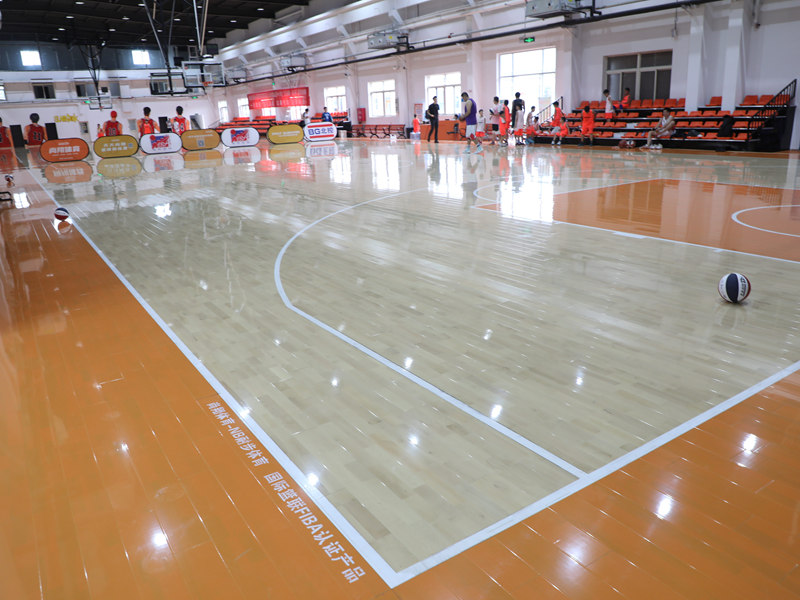
At every level of organized competitive basketball, from high school varsity games to the highest levels of professional play, indoor basketball court wooden flooring is the standard playing surface that all official rules and performance guidelines are designed around.

The official rules of the sport, which define everything from court dimensions to how players are allowed to move, were developed over decades of play on wooden surfaces, so the entire game is optimized to work best on a properly constructed wooden floor. All official competitive basketball events require that the court surface meets specific performance standards for shock absorption, vertical deformation, and slip resistance, which are most easily and consistently achieved with a high-quality wooden flooring system. When games are played on a surface that does not meet these standards, it can change the way the game is played in unfair ways, making it harder for players to perform at their normal level and increasing the risk of injuries. Players who are used to playing on wooden courts often struggle to adjust to harder, less consistent surfaces, as their muscle memory and movement patterns are developed specifically around the performance characteristics of wood. By using standard wooden basketball flooring, all teams in a league can compete on surfaces that have consistent performance properties, ensuring that no team gains an unfair home-court advantage from a floor that performs very differently from the courts in other facilities. This consistency is essential for fair, competitive play, as it means the outcome of a game is determined by the skill, effort, and teamwork of the players, not by the unique properties of the playing surface. The universal use of wooden basketball flooring across top competitive levels also creates a consistent playing experience for players as they move up through different levels of the sport, from youth leagues all the way to professional competition.