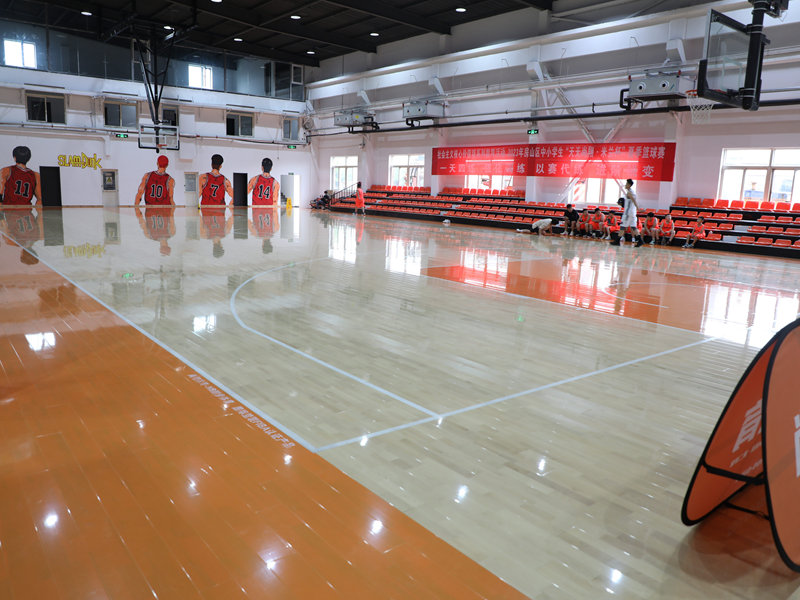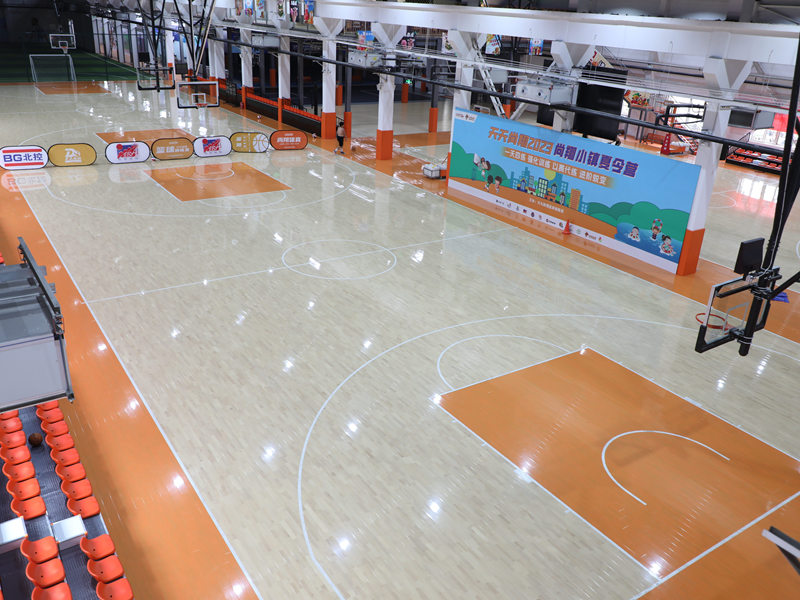
Not all indoor basketball court wood flooring systems are the same, and there are clear, important differences between the systems built for professional competitive play, and the systems designed for casual recreational use. Professional grade systems are built with multiple dedicated layers: a separate subfloor layer, a specialized elastic cushioning layer, and a thick top wood playing surface. Every single layer is engineered and tested to meet strict international athletic performance standards, with exact requirements for shock absorption, vertical deformation, ball rebound, and surface friction. These systems are designed to handle thousands of hours of intense, high-level play every year, with professional athletes making hard, explosive moves on the surface every single day. They are built to retain their exact performance characteristics for decades, even under the heaviest possible use.
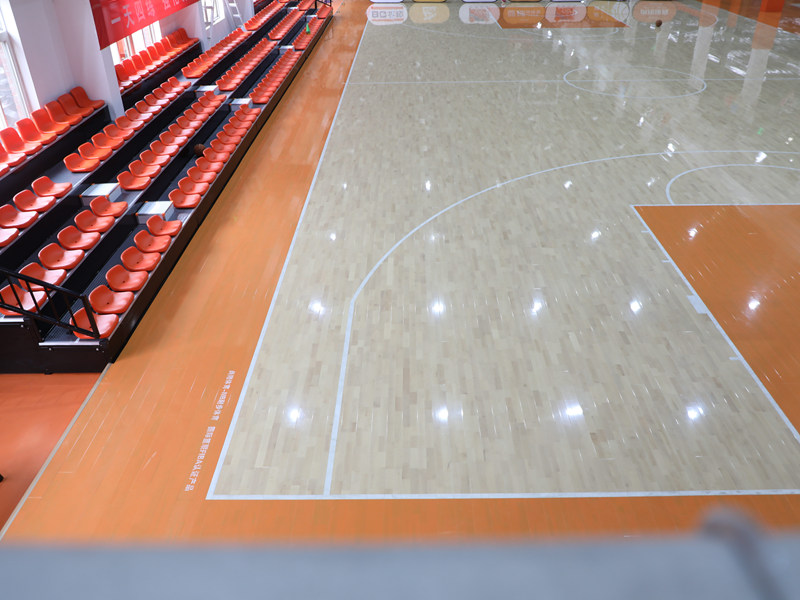
Recreational grade wood basketball floors, by contrast, are built for lower intensity use in community centers, school gyms, and home basketball courts. These systems often combine some of the layers of the professional system, using a thinner top wood surface and a simpler cushioning design that still provides good shock absorption and safe play, but at a more affordable price point. They are not designed for the extreme, non-stop professional level of use, but they still deliver all the core benefits of a wood floor: natural elasticity, comfortable feel, and far better joint protection than any hard synthetic surface. For casual players, youth leagues, and people who play a few times a week, a recreational grade wood floor is more than enough to provide a great, safe playing experience.
The key difference between the two types of systems is not just the thickness of the wood, but the level of performance consistency across the entire surface. Professional systems are tested at dozens of points across the entire court, to make sure that the shock absorption, friction, and rebound are within a very narrow, precise range at every single spot. Recreational systems have slightly wider acceptable performance ranges, which is perfectly fine for casual play, but not acceptable for high level competitive sports where even a tiny difference in surface performance can change the outcome of a professional game. Both types of systems are great choices, as long as they are matched to the level of use the venue will see, and both deliver the unique benefits that only a wood basketball floor can provide.