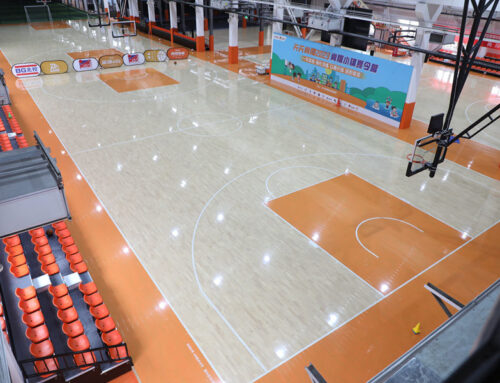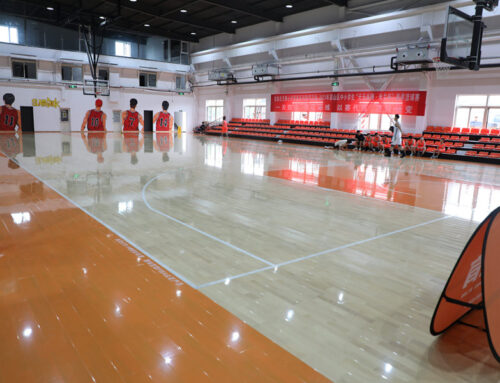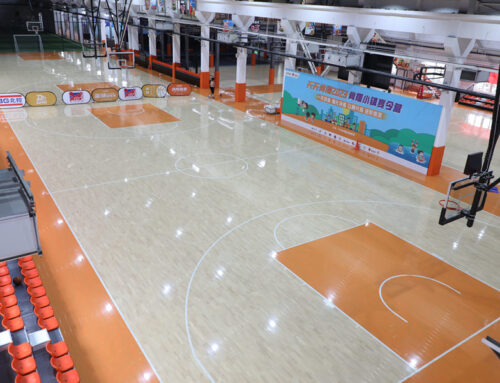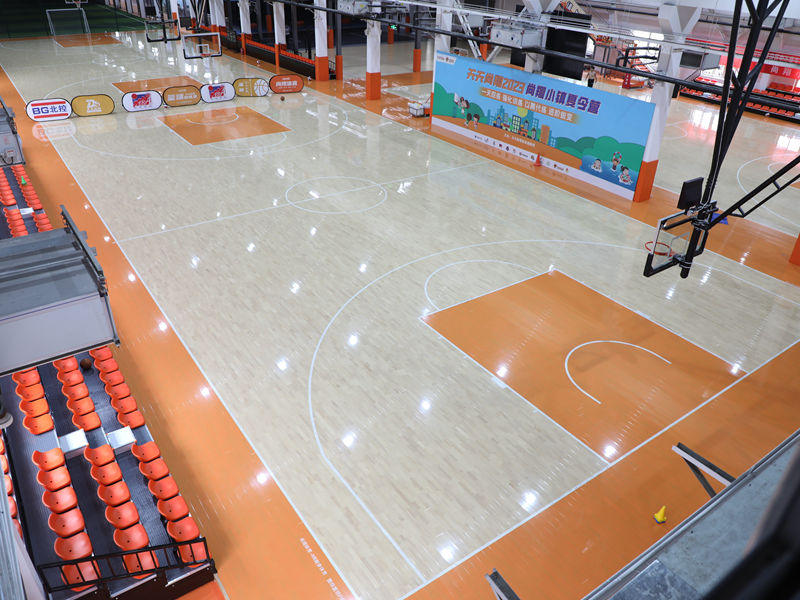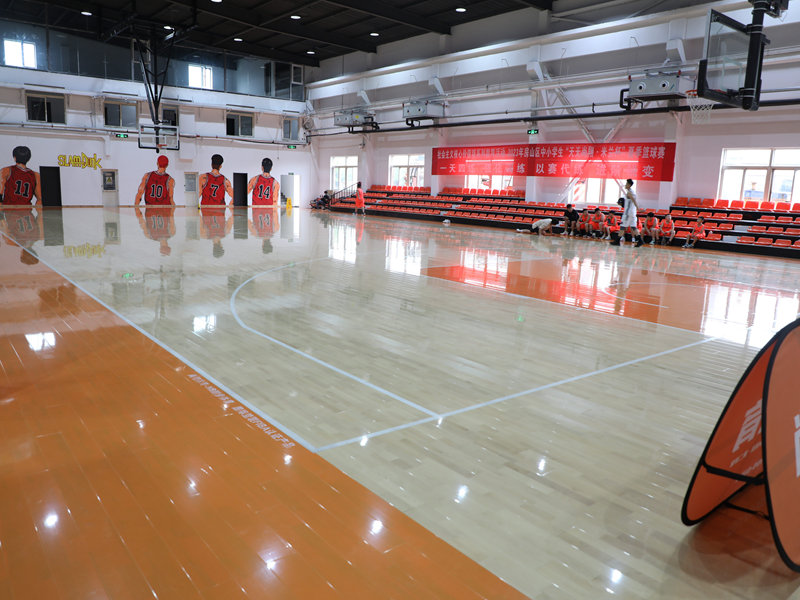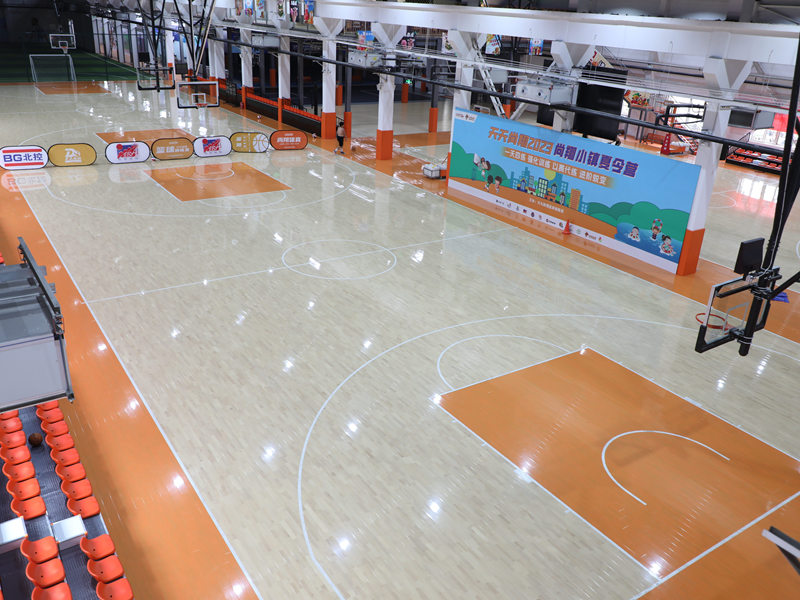
Indoor sports wood flooring is typically constructed using solid hardwood, most commonly maple, due to its exceptional durability, density, and resistance to wear. Maple’s tight grain structure minimizes splintering and absorbs impact effectively, making it ideal for high-impact sports like basketball, volleyball, and gymnastics. The flooring system consists of multiple layers:
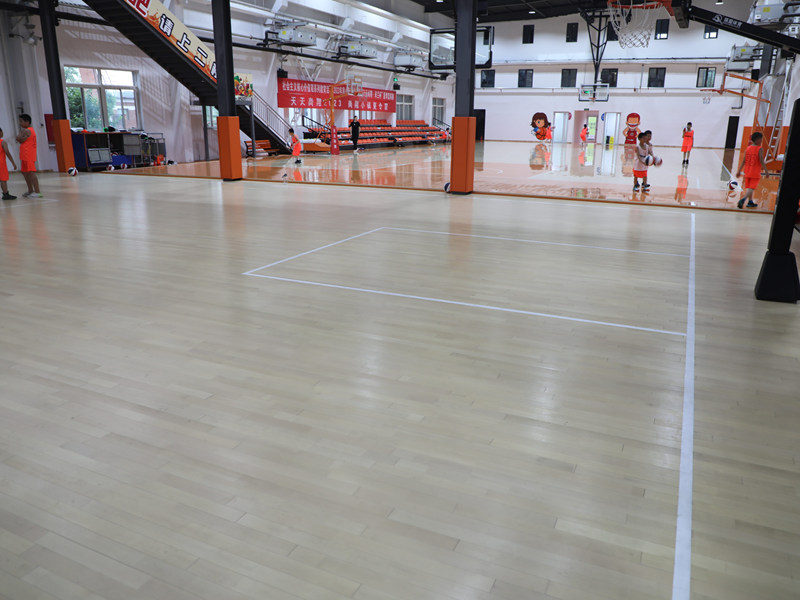
- Subfloor: A resilient base layer, often made of plywood or rubber pads, provides shock absorption and reduces fatigue on athletes’ joints.
- Underlayment: A vapor barrier or foam layer prevents moisture damage and enhances stability.
- Surface Layer: The hardwood planks, usually 3/4-inch thick, are arranged in a specific pattern (e.g., parquet or straight-lay) and finished with a protective coating.
Modern systems may also incorporate floating subfloors with spring-loaded supports or air cushions to enhance energy return and reduce long-term wear on the wood.
2. Performance benefits for athletes
The primary advantage of wood flooring lies in its ability to balance firmness with cushioning. Unlike concrete or vinyl, wood reduces the risk of injuries by absorbing up to 53% of impact forces, according to the Maple Flooring Manufacturers Association (MFMA). Key performance metrics include:
- Shock Absorption: Minimizes stress on knees, ankles, and backs during jumps and pivots.
- Ball Bounce: Ensures consistent rebound for sports like basketball, adhering to FIBA (International Basketball Federation) standards.
- Traction: The finish provides grip without being overly slippery, reducing slips and falls.
- Uniformity: A well-installed wood floor offers a flat, even surface, critical for precision in sports like dance or volleyball.
These properties collectively enhance athletic performance while prioritizing safety, a factor that has cemented wood’s dominance in professional sports venues.
3. Installation and customization
Professional installation is critical to the longevity and performance of sports wood flooring. The process involves:
- Site Preparation: Ensuring the subfloor is level, dry, and free of debris.
- Moisture Control: Testing humidity levels to prevent warping or cupping.
- Panel Layout: Arranging planks in a pattern that optimizes structural integrity and aesthetics.
- Sanding and Finishing: Applying multiple coats of polyurethane or acrylic finishes for durability and slip resistance.
Customization options abound, from team logos and court lines to color choices that align with branding. Advanced techniques like laser-engraved designs or LED lighting integration are gaining popularity in high-end facilities.
4. Maintenance and longevity
Proper maintenance extends the lifespan of sports wood flooring, which can last 20–40 years with care. Key practices include:
- Daily Cleaning: Using soft-bristled brooms or microfiber mops to remove dust and debris.
- Periodic Refinishing: Sanding and reapplying finishes every 5–10 years, depending on usage.
- Humidity Control: Maintaining indoor relative humidity between 35% and 50% to prevent wood expansion or contraction.
- Protective Measures: Using mats at entrances and avoiding high heels or heavy equipment on the surface.
Facilities must also address spills promptly and avoid harsh chemicals that can strip finishes or damage the wood.
5. Environmental sustainability
Wood flooring’s environmental impact is a growing consideration. Many manufacturers source maple from sustainably managed forests, and the material is biodegradable at the end of its life cycle. Additionally, wood’s natural insulation properties can reduce energy costs in climate-controlled venues. Innovations like reclaimed wood flooring and low-VOC finishes further enhance eco-friendliness.
6. Trends and innovations
The industry is evolving to meet modern demands:
- Hybrid Systems: Combining wood with synthetic overlays for multi-purpose use (e.g., converting a basketball court into a concert venue).
- Smart Flooring: Embedded sensors to monitor usage, humidity, and impact forces in real time.
- Modular Designs: Interlocking panels that simplify repairs and allow for quick reconfiguration.
These advancements cater to venues seeking versatility without compromising performance.
Conclusion
Indoor sports wood flooring remains unmatched in its ability to merge safety, performance, and visual appeal. While initial costs may be higher than synthetic alternatives, its durability and low long-term maintenance expenses make it a cost-effective investment. As technology advances, wood flooring continues to adapt, ensuring it stays at the forefront of athletic facility design. Whether for a neighborhood gym or a professional stadium, the choice of wood is a testament to its enduring value in the world of sports.
By prioritizing quality installation, routine care, and sustainable practices, facilities can ensure their wood floors provide a safe, high-performing surface for generations of athletes to come.