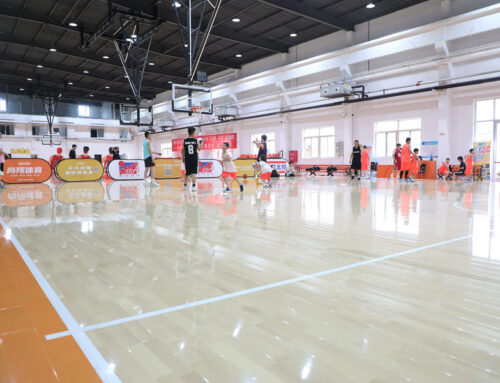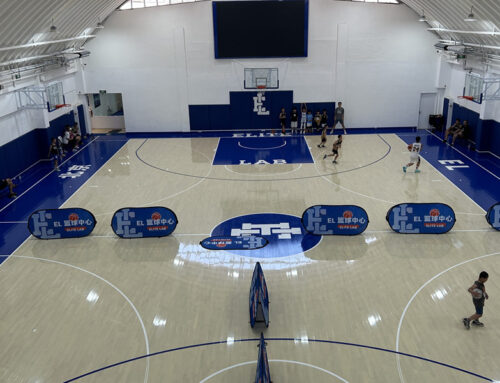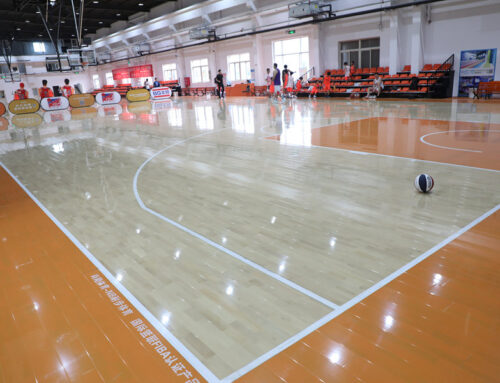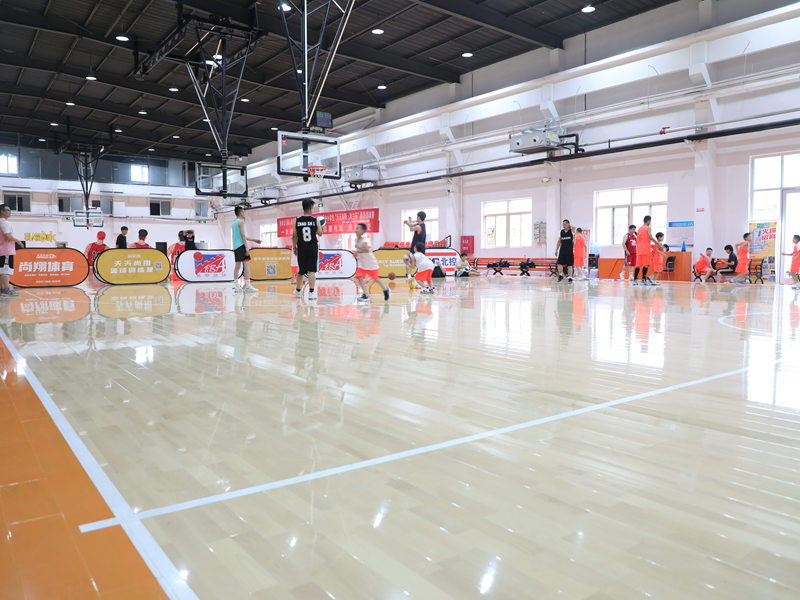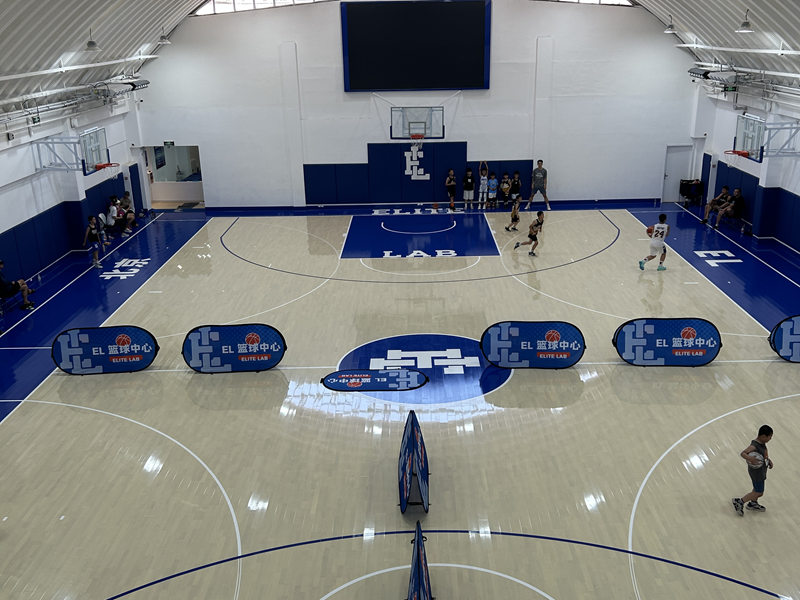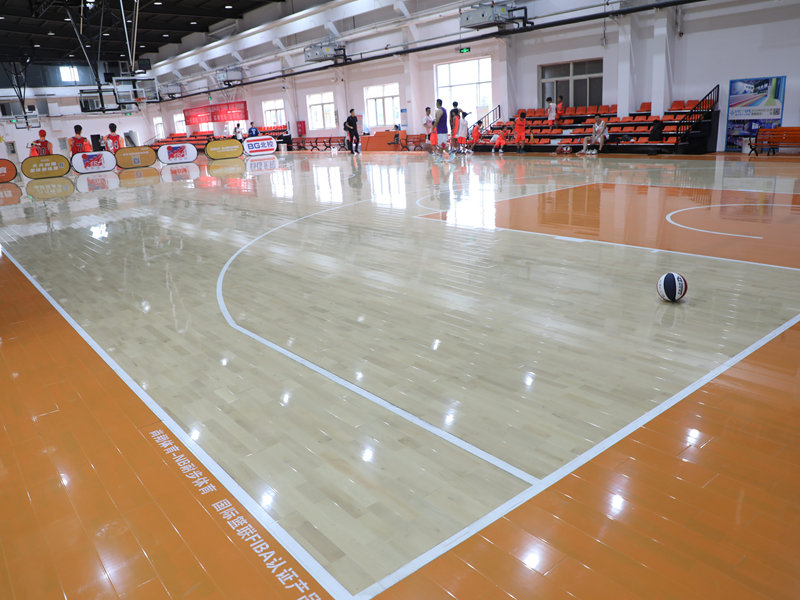
Noise is one of the most underappreciated challenges in indoor sports facilities. A basketball bouncing on a hard floor, shoes squeaking, players shouting, balls hitting the floor. The acoustics of the space can make or break the user experience. Detachable indoor sports wood flooring addresses this challenge in ways that many people do not expect.
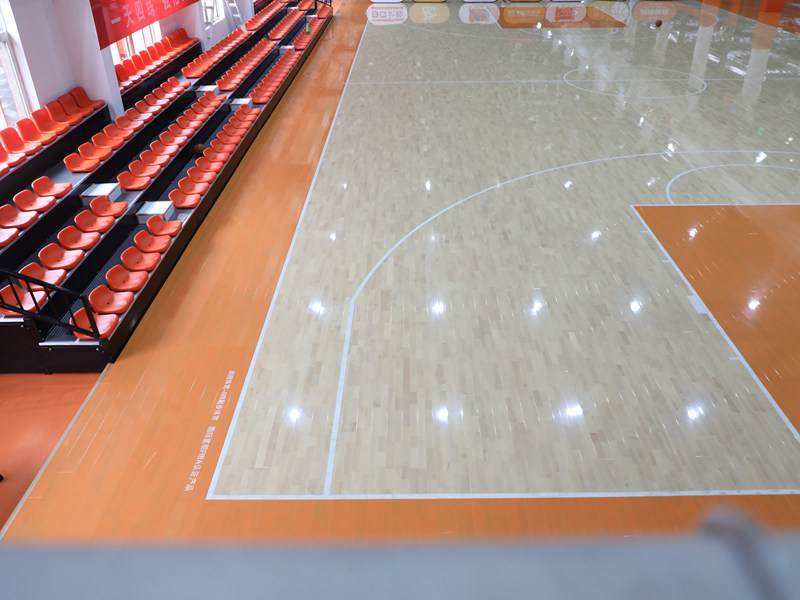
The hardwood surface itself contributes to acoustics. Dense hardwood reflects sound, which is why a gym with a bare wood floor can feel echoey and loud. However, the finish applied to the wood can be engineered to absorb some high-frequency sound. More importantly, it is what lies beneath the hardwood that makes the real difference.
The shock-absorption underlayment in a detachable sports floor is typically made from foam or rubber, both of which are excellent sound absorbers. As sound waves travel downward from the playing surface, they hit the underlayment and are partially absorbed rather than reflected back up. This reduces the overall reverberation time in the room, making it quieter and more comfortable.
Because the underlayment is modular, matching the panel layout, every square meter of the floor has consistent acoustic properties. There are no hard spots where sound bounces differently, which can happen with fixed floors that have uneven adhesive coverage or variable subfloor conditions.
The mechanical connection between panels also affects acoustics. A tight, well-engineered connection eliminates gaps that can act as sound reflectors or amplifiers. When panels are loose or poorly connected, they can rattle or resonate, adding unwanted noise. Modern detachable systems are designed to eliminate this entirely.
For multi-purpose facilities, the acoustic benefits are even more valuable. When the space transitions from a loud basketball game to a quiet yoga class, the floor’s sound-absorbing properties help make that transition smoother. The floor does not just serve the athletes. It serves the entire acoustic environment of the facility.
If noise is a concern in your facility, ask your flooring supplier for acoustic test data. A good detachable sports floor should reduce impact noise by fifteen to twenty-five decibels compared to a bare concrete surface, and significantly reduce airborne reverberation as well.