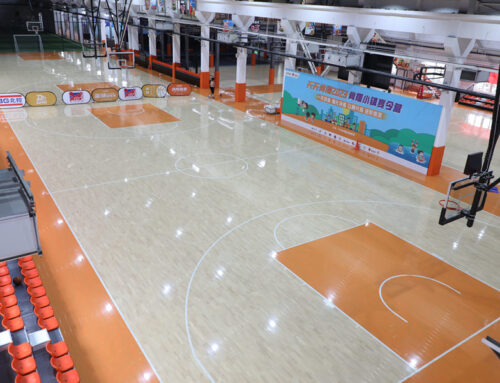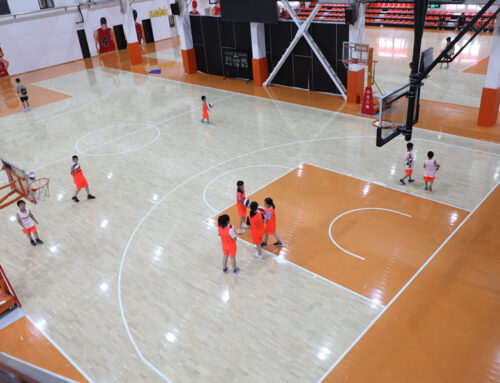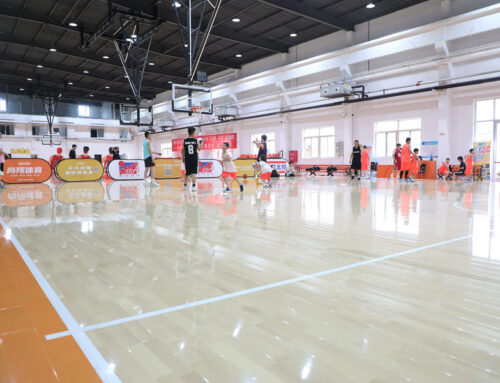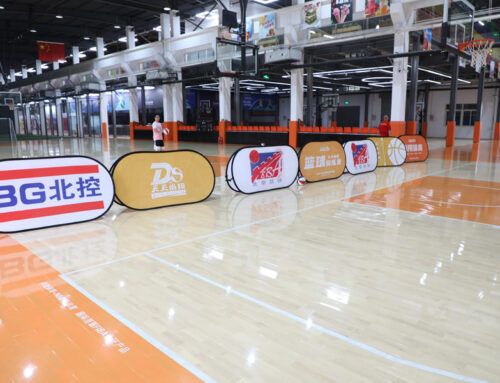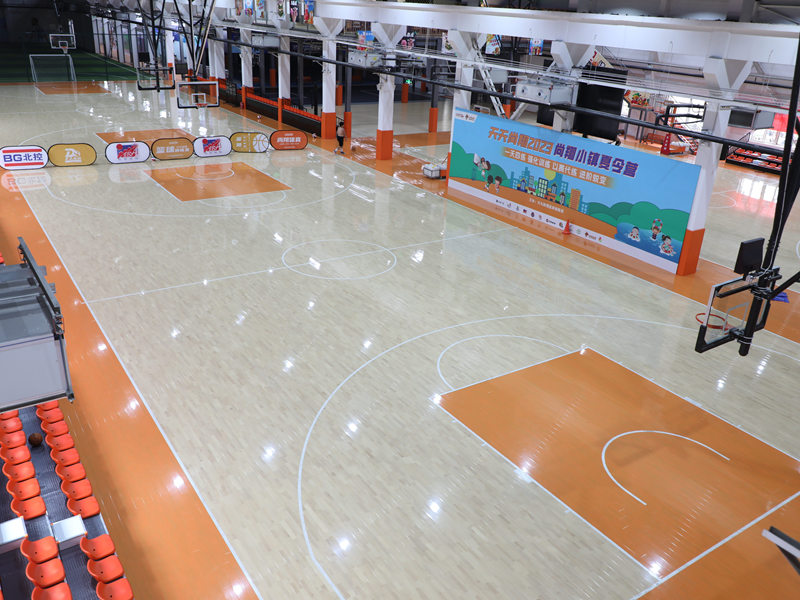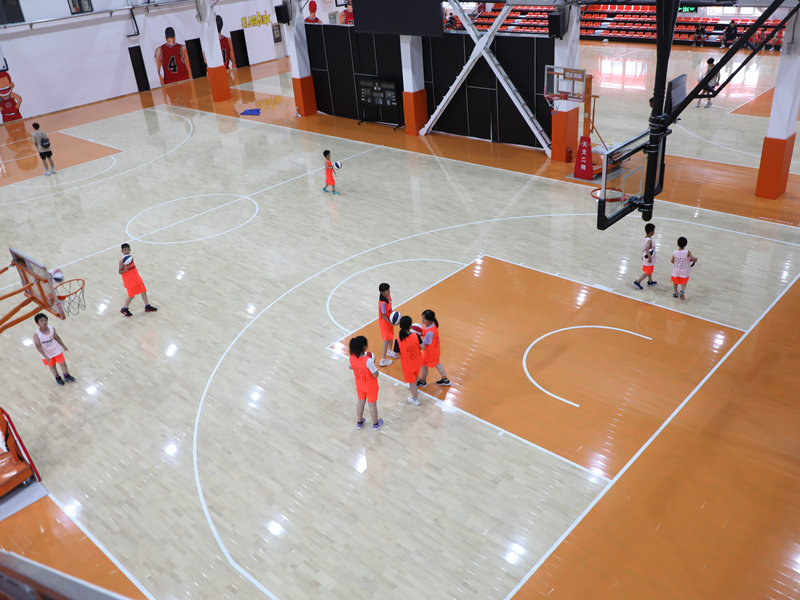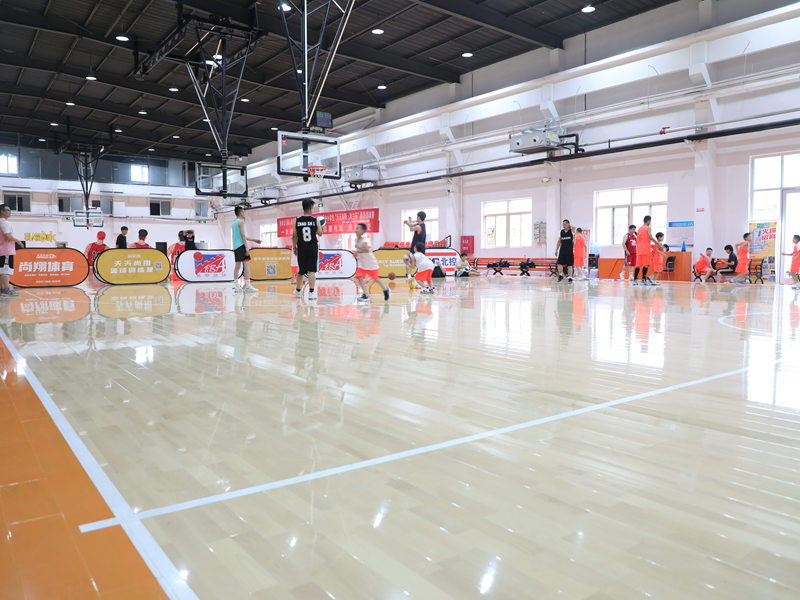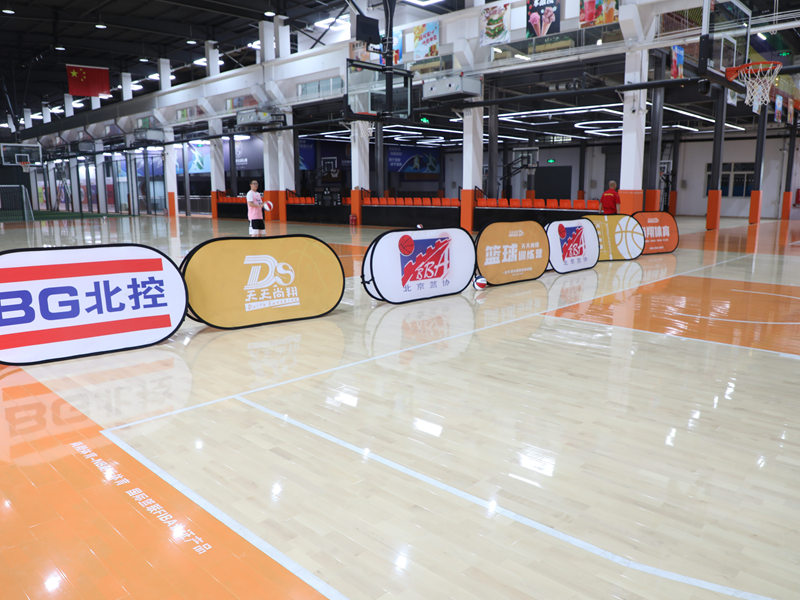
Safety is paramount in any sports environment, and portable indoor sports wooden flooring incorporates several design features that protect athletes, spectators, and facility staff. Understanding these features helps you evaluate whether a portable floor meets your safety requirements.
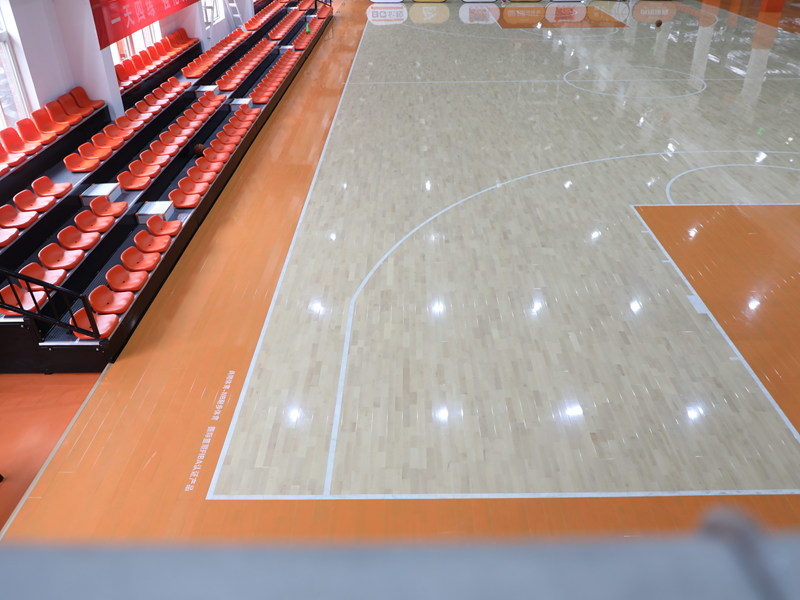
Shock Absorption
One of the most important safety features of any sports floor is shock absorption, the floor’s ability to reduce the impact forces transmitted to an athlete’s joints when they land from a jump or make a sudden stop. Portable indoor sports wooden flooring achieves shock absorption through a combination of the wood’s natural elasticity, the foam or rubber layer in the multi-layer construction, and the slight flex of the subframe.
International standards specify minimum shock absorption values for different sports. Quality portable floors meet or exceed these values, providing protection comparable to permanent floors.
Surface Friction
Too little friction and athletes slip. Too much friction and they cannot change direction quickly, leading to knee and ankle injuries. Portable sports floors are finished to provide a friction coefficient that falls within the safe range specified by sports governing bodies. The finish is tested using standardized methods to ensure consistency.
Flat, Seamless Surface
A portable floor with loose or uneven panels creates tripping hazards. Quality connection systems ensure that panels sit flush with each other, creating a flat, continuous surface. The subframe’s adjustability allows installers to correct any minor irregularities in the building floor, ensuring the final surface is level.
No Adhesive, No Chemicals
Because portable floors use no adhesive, there is no off-gassing of volatile organic compounds. This makes the air quality better for athletes and spectators, especially in enclosed spaces. Permanent floors often use adhesives that can release fumes for days or weeks after installation.
Edge and Border Safety
The edges of a portable floor are designed to minimize tripping. Most systems include beveled edges or transition strips that create a smooth transition between the floor and the surrounding surface. When the floor is installed near walls or columns, the transition is carefully managed to eliminate gaps.
Fire Safety
Wood is a combustible material, but sports floors are treated with fire-retardant finishes that meet building code requirements. The finish slows the spread of flame and reduces smoke production. Always verify that the floor you purchase meets the fire safety standards of your jurisdiction.
Maintenance-Related Safety
A well-maintained floor is a safe floor. Dust, debris, and worn finish all increase the risk of slips and falls. The maintenance practices outlined in other guides are not just about preserving performance, they are about preserving safety.