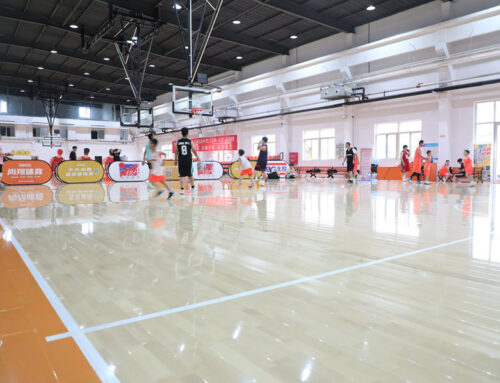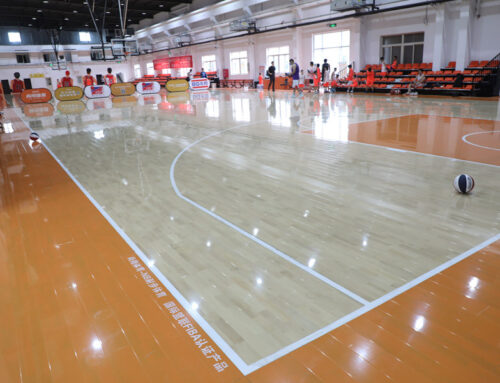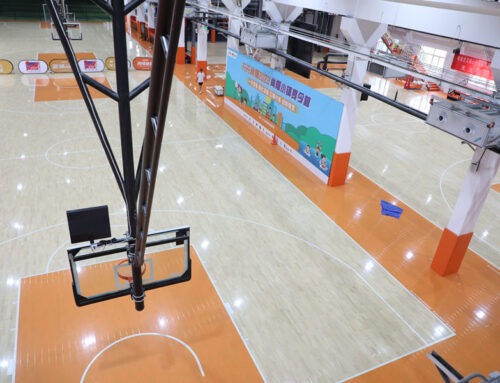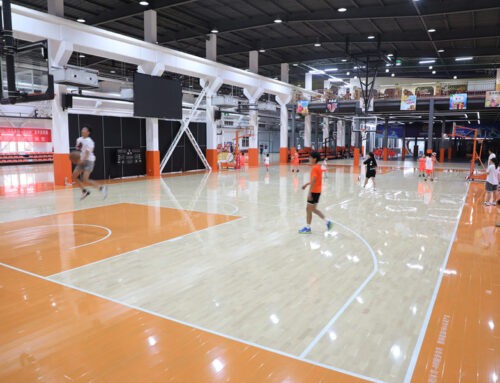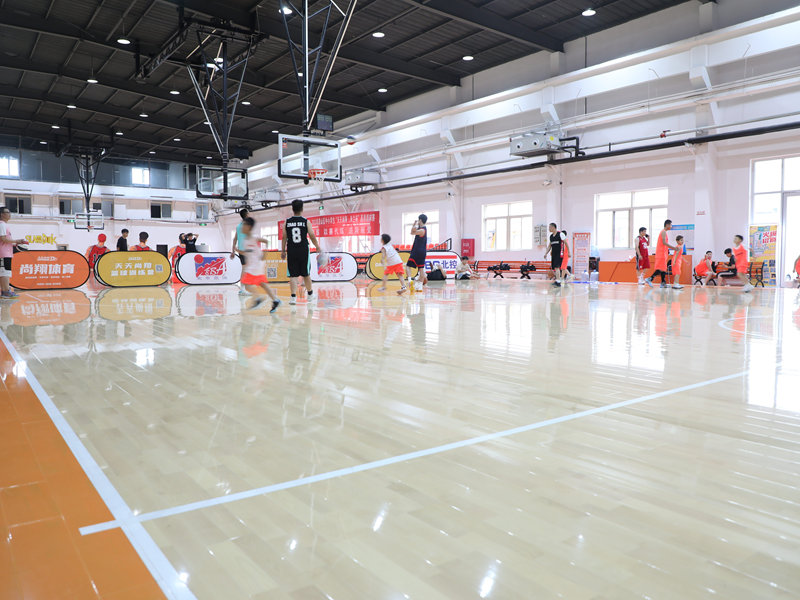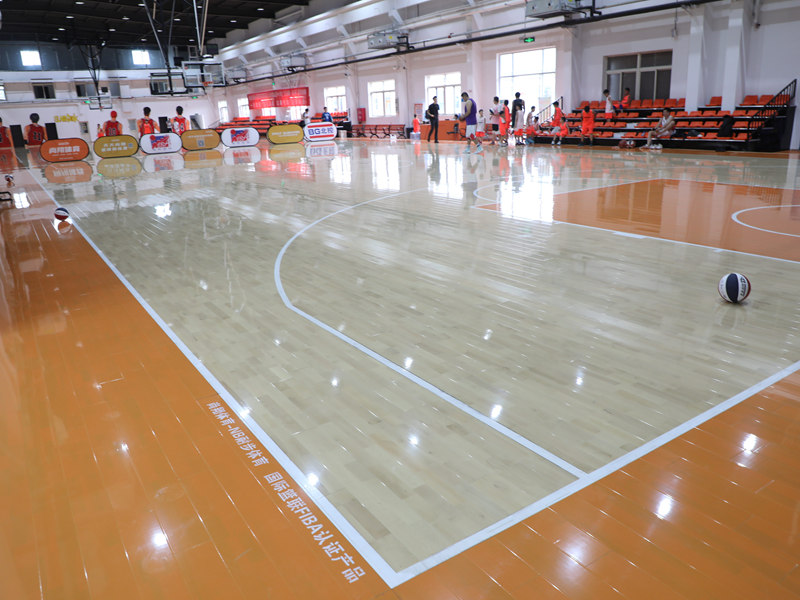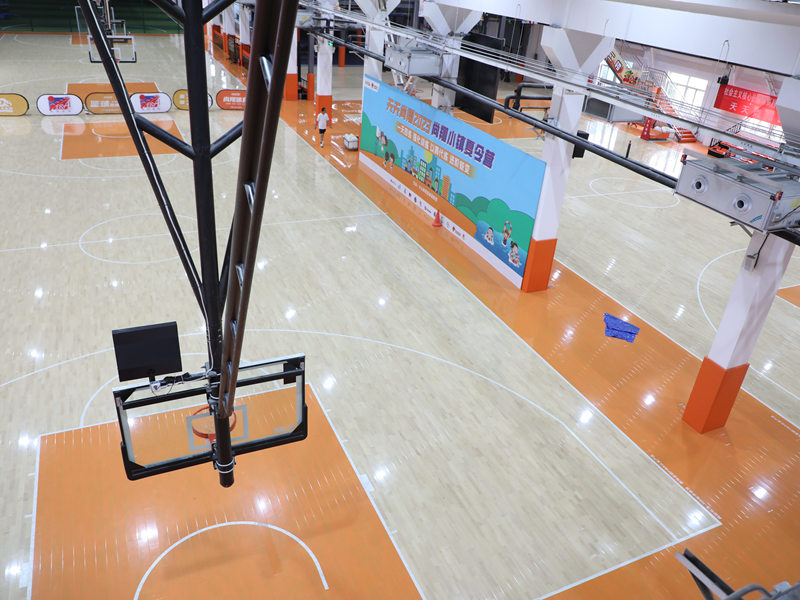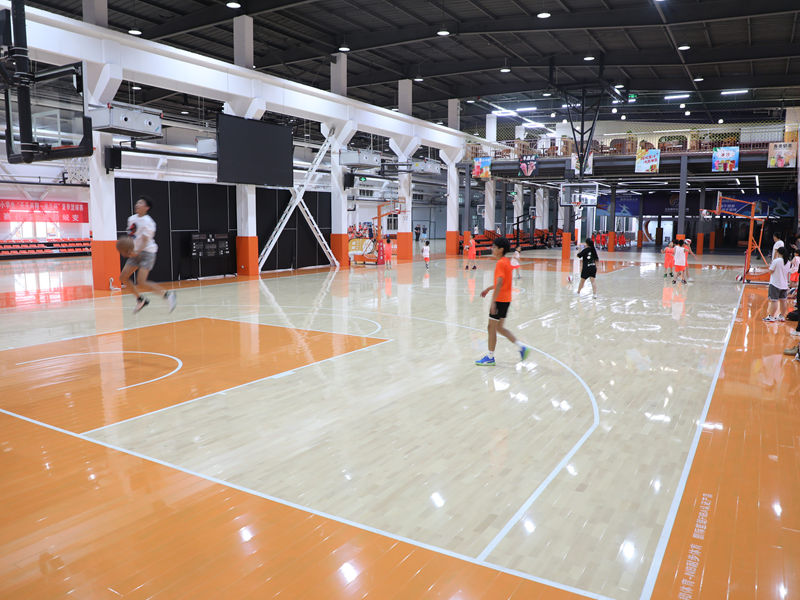
School gymnasiums are one of the most demanding environments for sports wood flooring. The usage is intense but unpredictable. A floor that sits empty all summer may be pounded by 500 students in a single afternoon in September. The maintenance budget is always tight. And the safety requirements are non-negotiable because children are the users.
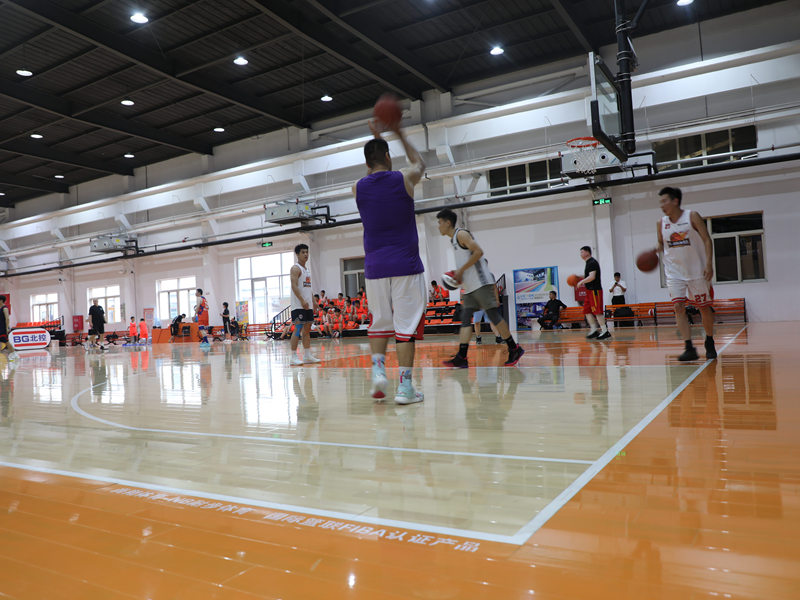
The first challenge is multi-use. A school gym is not just for basketball. It is for volleyball, badminton, gymnastics, dance, assemblies, and sometimes even exams. A floor that is optimized for one sport may not work well for another. The solution is a compromise design: a medium-cushion structural system with a friction coefficient in the middle of the range, a finish that works for multiple sports, and a wood species that is durable enough for heavy use but affordable enough for a school budget.
The second challenge is budget. Schools operate on fixed budgets with little room for overruns. The temptation is to go with the cheapest option. But the cheapest floor often costs the most in the long run. A floor that needs replacing in five years costs more over ten years than a floor that lasts fifteen. Schools should look at total cost of ownership, not just the initial bid.
The third challenge is safety. Children run harder, fall more often, and are less aware of their surroundings than adult athletes. The floor must have excellent shock absorption to protect developing joints. The friction must be high enough to prevent slipping but not so high that it causes tripping. The finish must be non-toxic and low-VOC. And the surface must be free of splinters, gaps, and loose panels that could cause injury.
The fourth challenge is maintenance. School custodial staff are not professional floor maintenance teams. They have many responsibilities and limited training. The floor must be easy to maintain with basic tools and cleaners. Complex maintenance procedures will not be followed consistently, which accelerates wear.
The best sports wood floors for schools are those designed with these realities in mind. Not the most expensive, not the most premium, but the most appropriate. A good supplier will understand that a school gym is not a professional arena, and will recommend a floor that balances performance, safety, and budget.