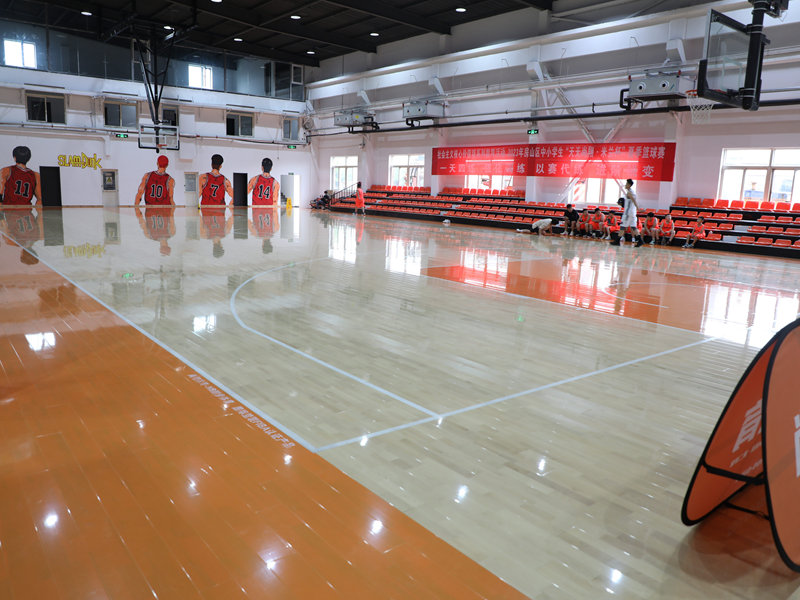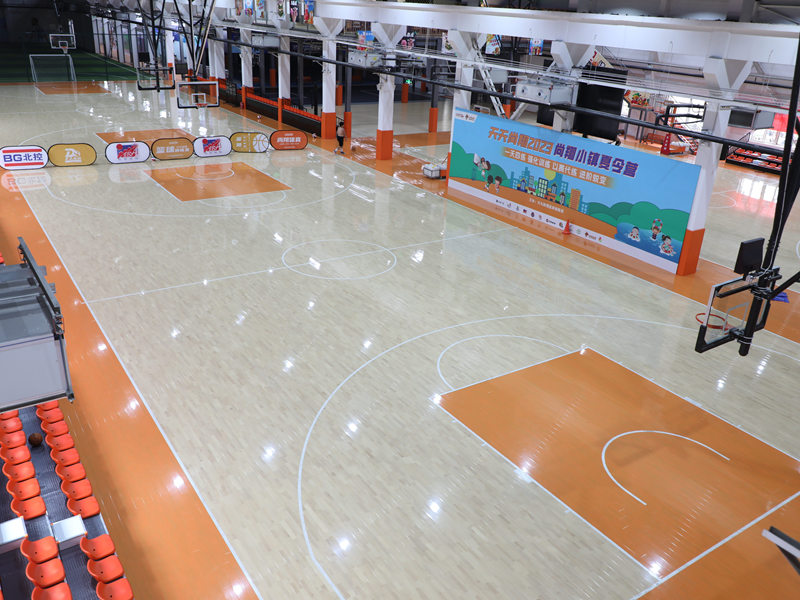
Wood and water are natural enemies, and no discussion of indoor basketball court flooring is complete without addressing the issue of humidity. Demountable sports wood flooring systems are designed to handle humidity fluctuations, but they still require a controlled environment to perform at their best.
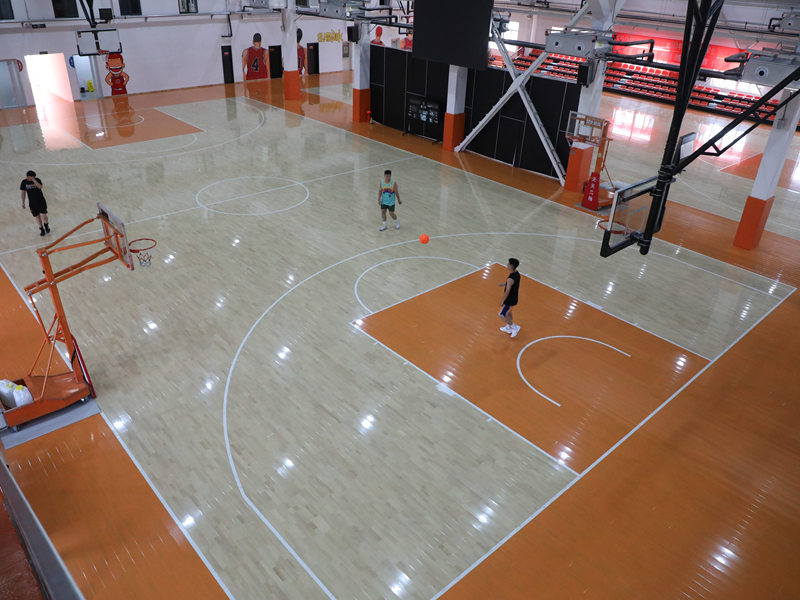
Wood is a hygroscopic material, meaning it absorbs and releases moisture based on the humidity of the surrounding air. When humidity is high, the wood absorbs moisture and expands. When humidity is low, the wood releases moisture and contracts. This expansion and contraction is normal and expected, but if it is not managed, it can cause serious problems, including cupped boards, gaps between panels, and buckling.
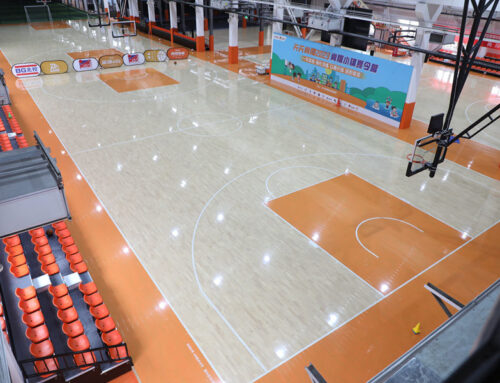
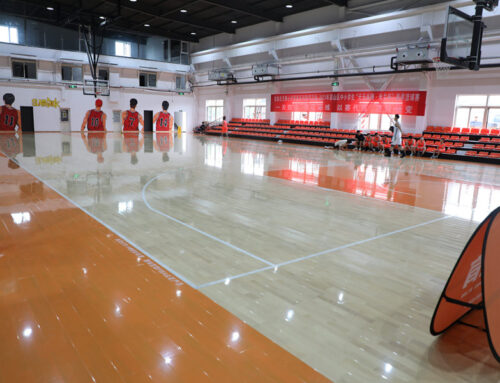
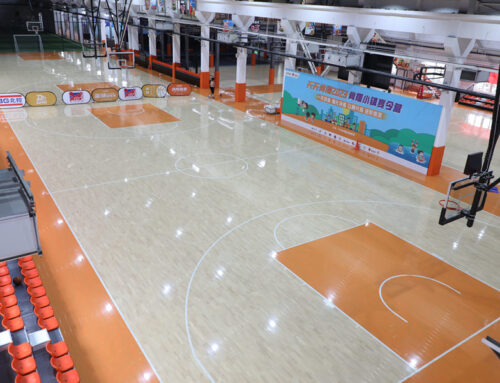
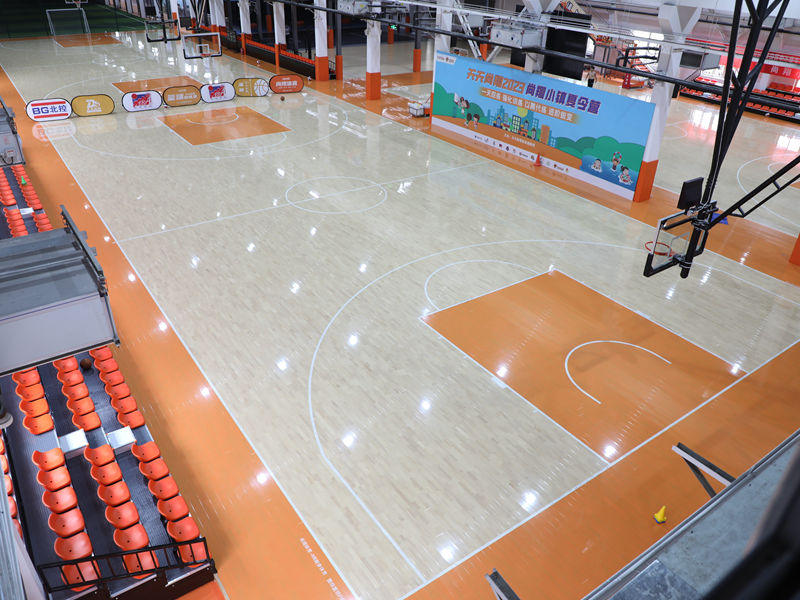
The ideal relative humidity for an indoor basketball court with a wood floor is between 40 and 60 percent. This range keeps the wood stable while also being comfortable for players. Most modern HVAC systems. Some facilities opt for a two-tone design, where the playing area is one color and the surrounding border is another. This creates a professional, arena-like appearance that players and spectators love.
The finish is another area where customization shines. As mentioned earlier, the finish affects both the appearance and the performance of the floor. A high-gloss finish gives the court a showroom look but provides less friction. A matte finish is safer for play but less visually striking. A satin finish is the most popular compromise, offering good friction with an attractive appearance. Some systems also offer textured finishes that mimic the look of natural wood grain.
Court markings are fully customizable. The standard basketball court lines are well known, but demountable systems allow you to add additional markings for other sports. A multi-use facility might have basketball lines, volleyball lines, and badminton lines all marked on the same floor. Because the floor is demountable, you can change the configuration by simply repositioning the panels or using removable line tape.
The layout of the panels can also be customized. While most courts use a straight lay pattern, some designers prefer a diagonal or herringbone pattern for a more distinctive look. The demountable connector system can accommodate various lay patterns, though straight lay is the most common and the easiest to install.
Border and end zone treatments are another customization option. The area around the perimeter of the court and the zones behind the baskets can be finished differently from the main playing area. This might include a different color, a different finish, or even a different material, such as rubber tiling for the end zones where players are which is the layer that actually wears. As long as the finish is intact, the wood beneath it is well protected.
The structural layer, typically plywood or high-density fiberboard, is also very durable. It does not wear directly because it is protected by the top layer, but it can be affected by moisture. Keeping the moisture barrier intact and maintaining proper humidity levels will ensure that the structural layer lasts for the life of the floor.
The shock absorption layer has a shorter lifespan than the wood layers. Foam pads can lose their resilience over time, typically after 10 to 15 years of heavy use. The good news is that in a demountable system, the shock absorption layer can be replaced without replacing the entire floor. The panels are removed, the old foam is taken out, and new foam is installed. This is a relatively simple and inexpensive process compared to replacing a fixed floor.
The demountable connectors are the most durable component of the system. They are made from steel or aluminum and are designed to last for the life of the floor. As long as they are not physically damaged, they will continue to function perfectly. This is one of the reasons demountable floors have such a long lifespan. The connectors do not degrade over time the way adhesive or nails might.
Refinishing is the single most important factor in extending the lifespan of a demountable sports wood floor. Every one to two years, the finish should be inspected and reapplied as needed. A full refinish, which involves sanding and recoating the entire surface, should be done every five to seven years. Each refinish removes a thin layer of wood, so you need to have If climate control is not available, the stack should be covered with a breathable tarp to protect it from dust and moisture.
The shock absorption layer should also be removed and stored separately. Foam pads can be stacked flat, and rubber mats can be rolled or stacked. These materials should also be kept in a dry, temperature-controlled environment.
When it is time to reinstall the floor, the process is essentially the reverse of disassembly. The shock absorption layer is laid down, the structural panels are installed and fastened, the playing surface panels are connected and secured, and the court is sanded, finished, and lined. Because the panels are pre-finished, the reinstallation process is faster than the initial installation. A court that took a week to install the first time can often be reinstalled in two to three days.
Relocation is where demountable floors truly shine. If your organization is moving to a new facility, the entire floor can be taken with you. This means your investment is not lost when you move. You simply disassemble the floor, transport it to the new location, and reinstall it. The cost of relocation is a fraction of the cost of a new floor.
For schools that share facilities or rotate between buildings, demountable floors offer unmatched flexibility. The floor can be installed in one building for the fall season, disassembled and stored over the summer, and then reinstalled in a different building for the spring season. This flexibility is simply not possible with fixed floors.